
Last updated October 16, 2026
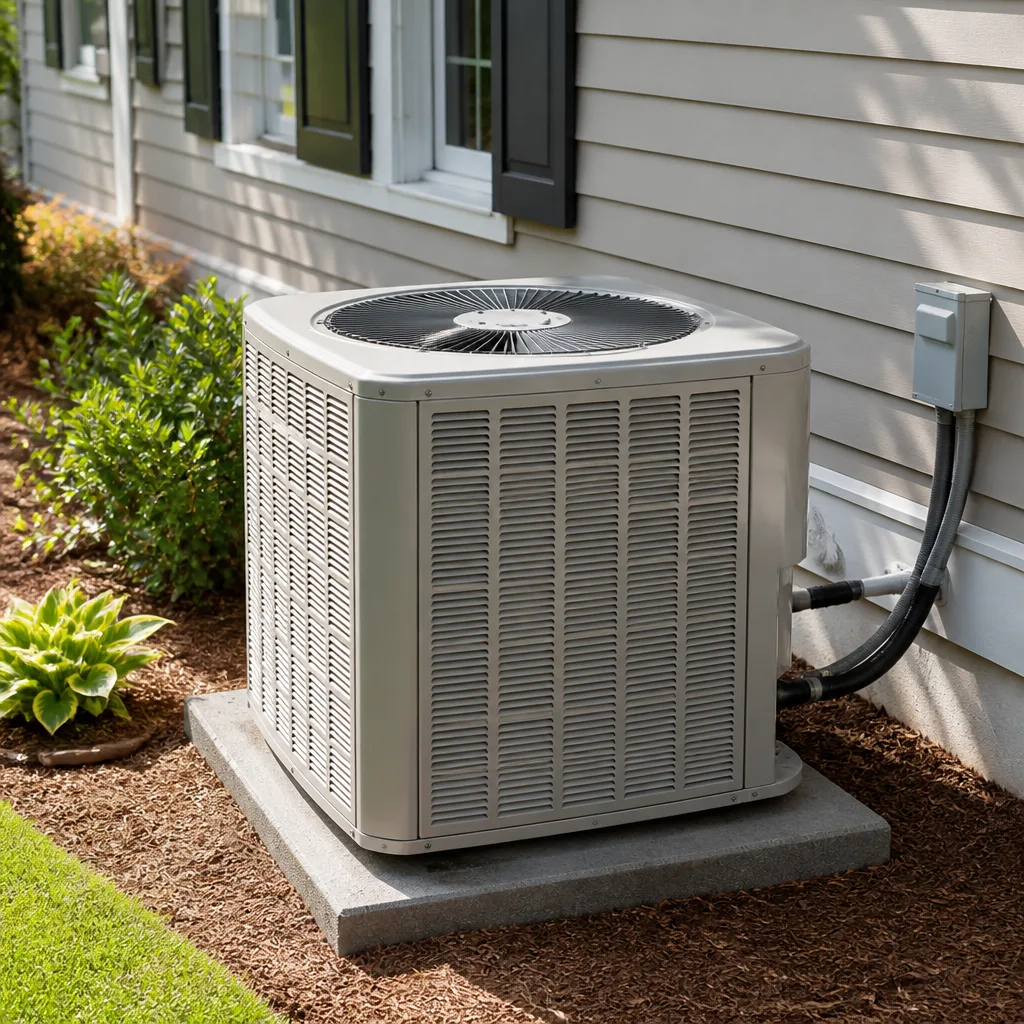 AC repair
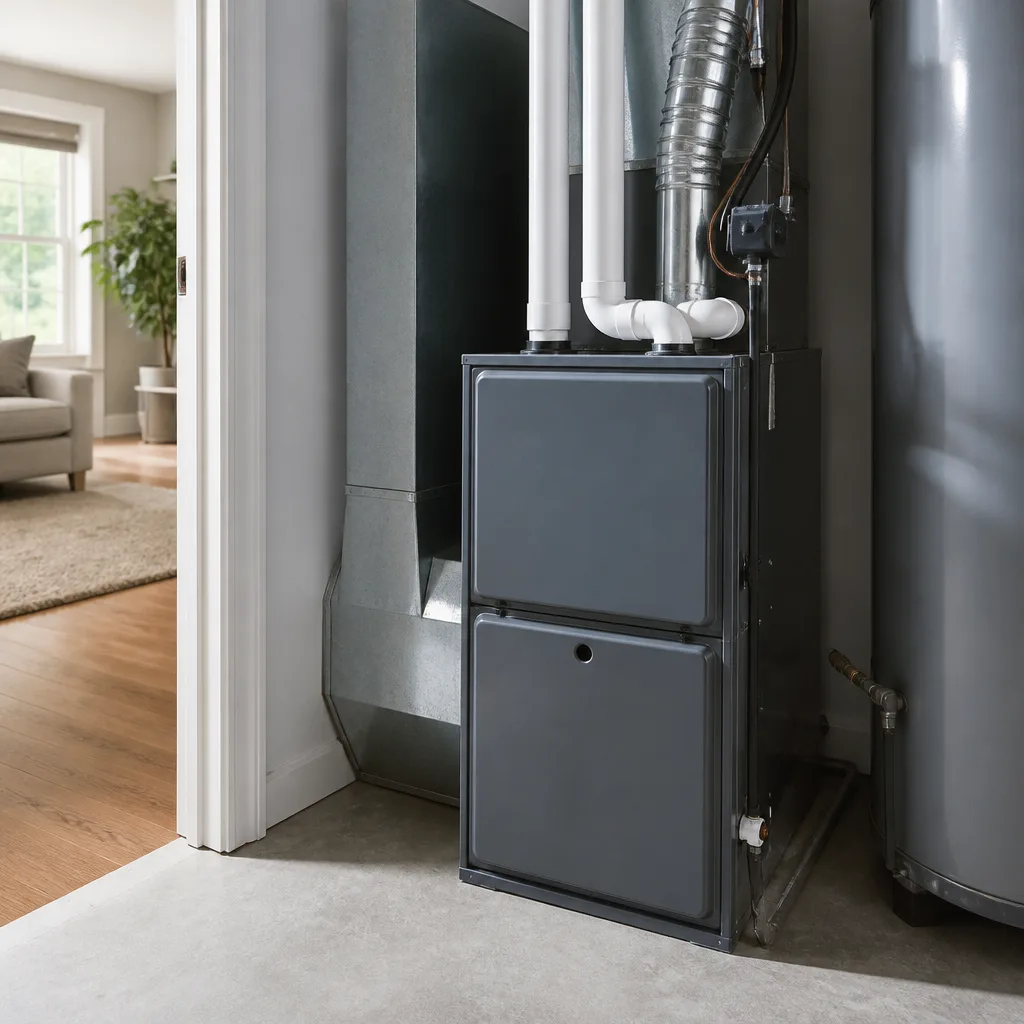 Furnace & heating
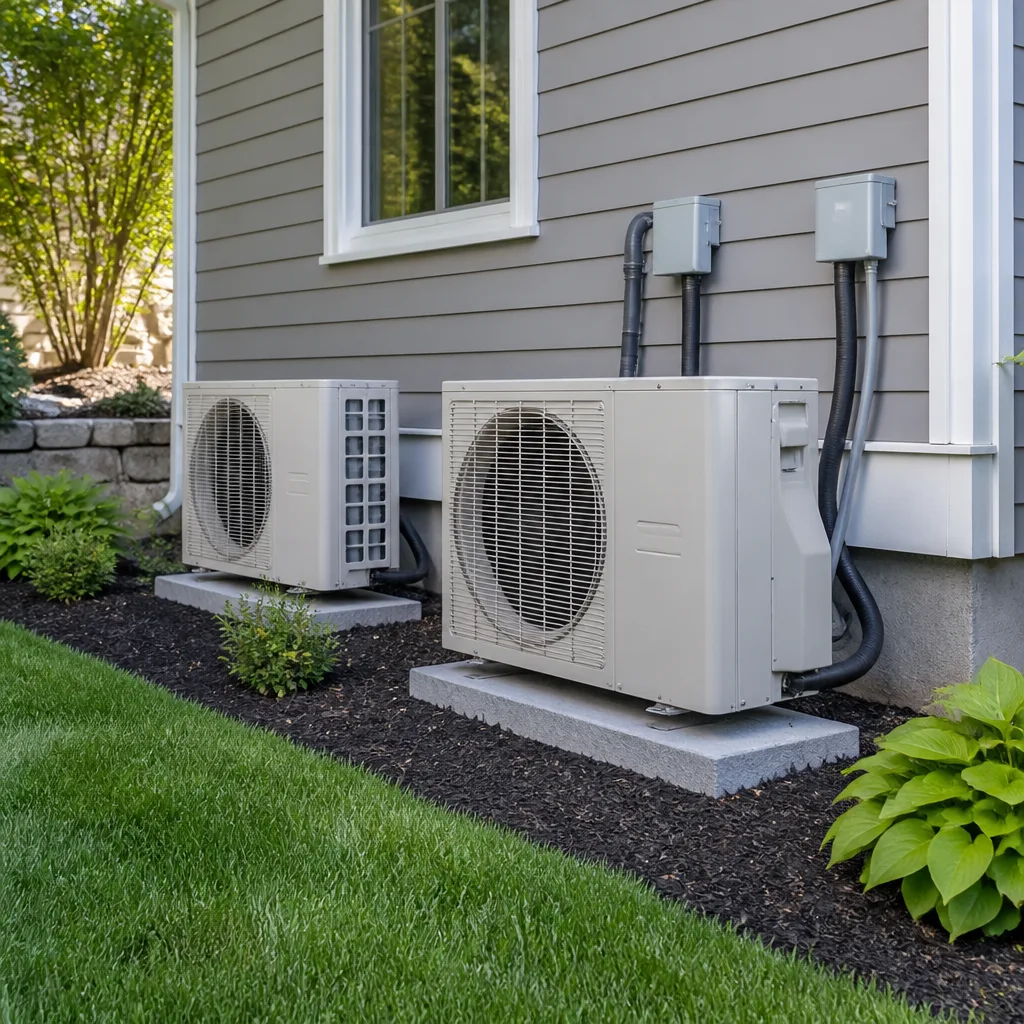 Heat pumps
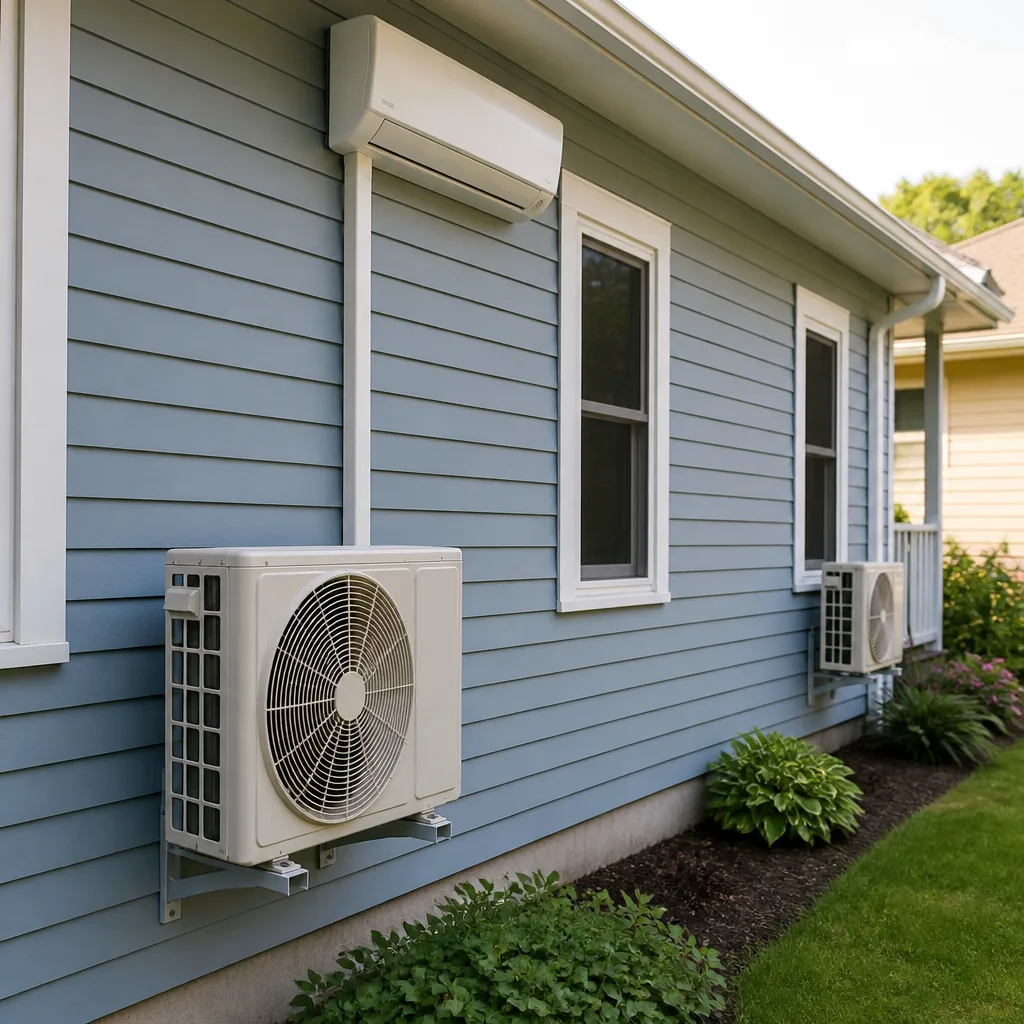 Ductless mini splits
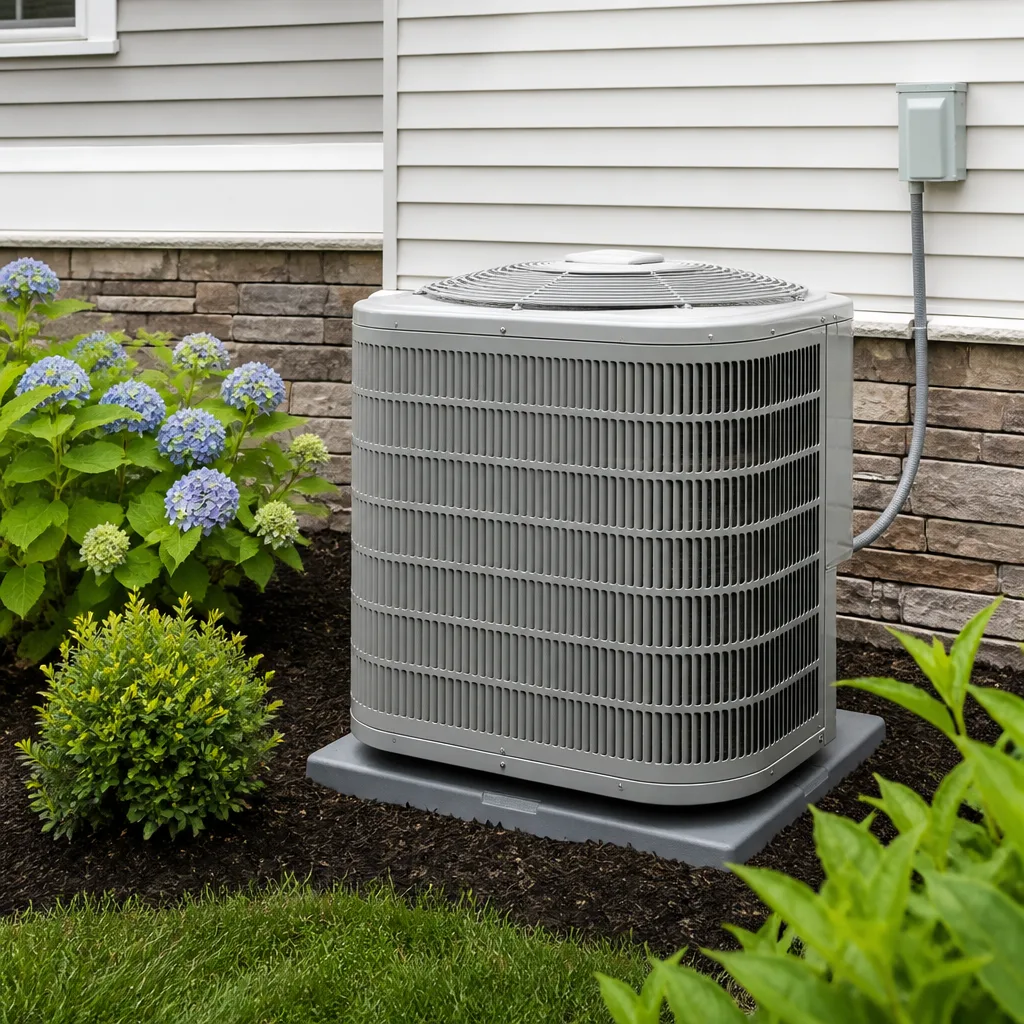 Carrier
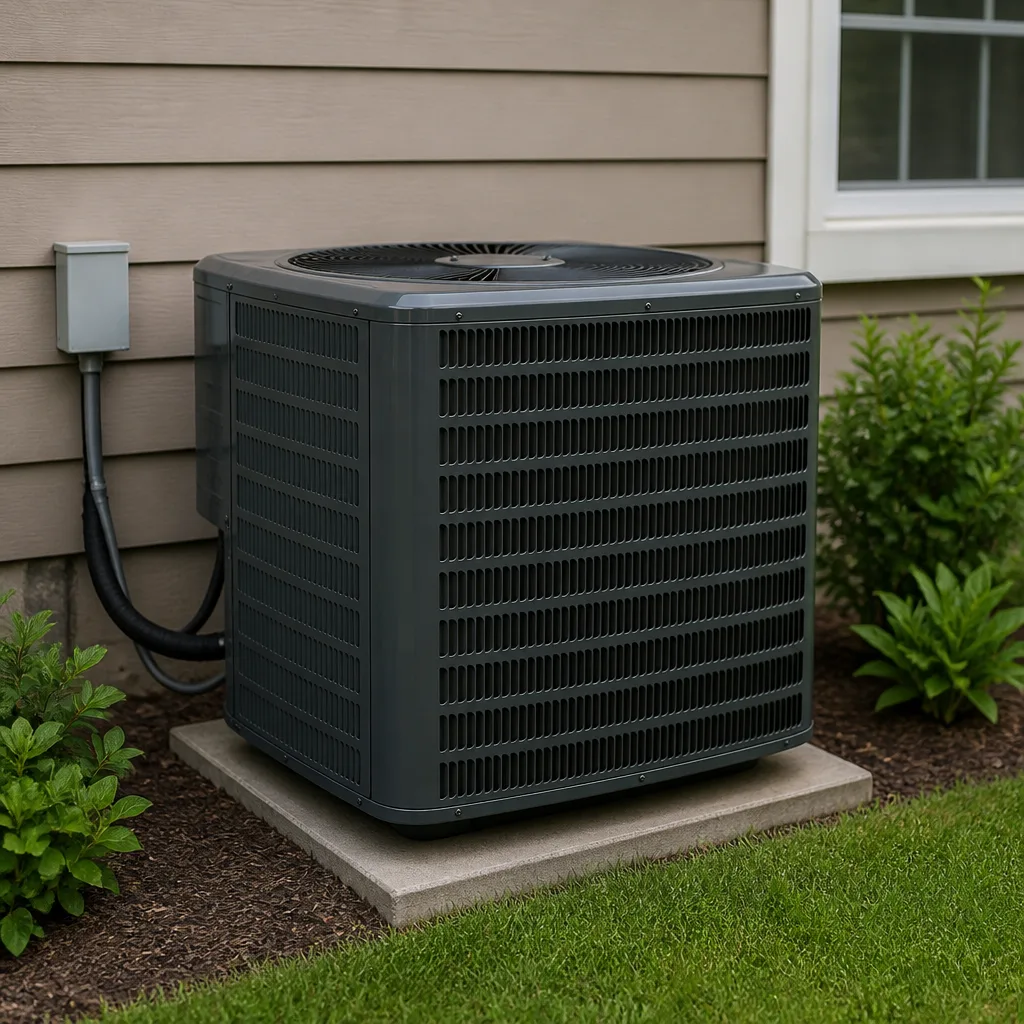 Goodman
Seasonal tune-up and full diagnostic on your Carrier, Trane, or Goodman system - readings shown to you before any repair is proposed
Diagnosis first, numbers second - you approve the repair price before a single part goes in.
Get your free estimateThe Complete Guide to HVAC in Torrance
Most HVAC guides written for “Southern California” assume 95°F desert summers and brutal winters. Torrance is a different world. Our city averages a July high of 75°F, sits under a marine layer most mornings, and gets salt-laced ocean breezes year-round. Those conditions change everything about how your air conditioner should be sized, how fast your outdoor unit corrodes, and which equipment actually saves you money. This guide covers what Torrance homeowners actually need to know, from permit traps at City Hall to utility rebate stacking that most contractors never mention, and points you to more guides & resources for deeper reading.
Quick Answer
HVAC decisions in Torrance hinge on three local factors: the coastal marine layer that drives morning humidity into your home, salt-air corrosion for properties within 1.5 miles of the beach, and mild temperatures that make oversized systems a costly mistake. A properly sized heat pump or AC with a coastal-rated condenser coil, installed to City of Torrance codes and paired with SCE and SoCal Gas rebates, will outperform and outlast a generic system sold with generic advice. We’ve been servicing Torrance since 2004, and this guide distills what we’ve learned from thousands of local installs and repairs.
Styles & brands we work with
Table of Contents
- Why Torrance’s Coastal Climate Changes Everything
- How to Right-Size HVAC Equipment for Torrance Homes
- Salt-Air Corrosion: The Coastal Condenser Problem
- Heat Pump vs. Gas Furnace: What Torrance Homes Actually Need
- SCE and SoCal Gas Rebates: How to Stack Them in 2026
- Torrance Permit Requirements That Delay Installs by Weeks
- Seasonal Maintenance Timeline for Torrance’s Microclimate
- Common Mistakes to Avoid
- When to Call a Professional
- Frequently Asked Questions
Why Torrance’s Coastal Climate Changes Everything
Torrance straddles two climates. Inland neighborhoods like North Torrance and the areas east of Western Avenue regularly hit 85°F in August, while the coastal strip from Redondo Beach down through South Torrance often stays in the low 70s with fog until noon. The same city, two very different HVAC loads.
The marine layer isn’t just a morning annoyance. It’s moisture-laden air that pushes indoor humidity up even when the temperature outside stays mild. A system sized purely for temperature will short-cycle, running for eight minutes and shutting off before the evaporator coil has time to pull moisture from the air. The result: a cool house that feels clammy, smells musty, and grows mold in the ducts. In Torrance, humidity control matters as much as temperature control, and that changes how we approach both equipment selection and airflow settings.
We regularly see homes in the Seaside and Hollywood Riviera neighborhoods where the original AC was sized using an inland California load calculation. The units are 30 to 40 percent oversized. They cool the house in five minutes, shut off, and leave the air damp. Then the compressor wears out prematurely from cycling on and off 40 times a day. A correctly sized Torrance system runs longer, uses less total energy, and dehumidifies better. That’s the counterintuitive truth: a smaller unit does more useful work here.
How to Right-Size HVAC Equipment for Torrance Homes
The industry standard for sizing is a Manual J load calculation, but most contractors skip it and use a rule of thumb: one ton of cooling per 500 square feet. That rule of thumb was built for Phoenix. In Torrance, it produces exactly the oversized, short-cycling problem we just described.
Here’s how a proper Torrance sizing process works:
- Measure the conditioned square footage, window area, and orientation. West-facing windows in Old Torrance get hammered by afternoon sun, while the same windows in the Plaza del Amo corridor are partially shaded by commercial buildings.
- Account for the marine layer’s humidity load. Coastal Torrance homes need a coil that runs slightly colder or longer to strip moisture, not more BTUs.
- Factor in insulation age and duct leakage. Homes built before 1980 in Torrance often have no wall insulation and leaky ducts. Fixing those is cheaper than buying another ton of cooling.
- Calculate the actual design day. Torrance’s design temperature is around 82°F, not 95°F. A system sized for 82°F with a humidity allowance will handle our real weather and still perform on the rare 90°F day.
The practical takeaway for most Torrance homes: a 2,000-square-foot house typically needs 2.5 to 3 tons of cooling, not the 4 tons a generic contractor would quote. Getting this wrong doesn’t just waste energy; it costs real money in premature compressor failure and poor comfort. If you’re looking at a new system, our AC installation service in Torrance includes a full load calculation, not a guess.
Salt-Air Corrosion: The Coastal Condenser Problem
Torrance’s ocean breeze is beautiful and terrible for outdoor HVAC equipment. Salt particles carried in the air bond with moisture and accelerate corrosion on condenser coils, fins, and electrical contacts. The closer you are to the beach, the faster it happens.
From our service records: outdoor condenser units within 1.5 miles of the Torrance coastline typically show visible fin corrosion at the 5-year mark and need coil replacement or unit replacement by year 10 to 12. The same unit in eastern Torrance or the Old Town area often goes 15 to 18 years before corrosion becomes a factor. That’s a real difference in replacement cost and timing.
What protects a unit in this environment:
- Coastal-grade coil coatings. Epoxy or phenolic-coated coils resist salt pitting far better than bare aluminum. Bryant, American Standard, and Carrier all offer coastal packages on their condenser models.
- Elevated installation. Mounting the condenser on pump-ups or a stand keeps it above the salt spray zone from ground-level moisture.
- Rinsing schedule. A twice-yearly rinse with a garden hose removes salt buildup before it etches the aluminum. We do this on every preventive maintenance visit for coastal Torrance homes.
- Avoiding direct ocean-facing exposure. Positioning the unit on the south or east side of the house, away from prevailing onshore winds, extends coil life measurably.
If your outdoor unit is 8 years old and within a mile of the beach, a corrosion inspection now is cheaper than a surprise replacement in August. Our AC repair team in Torrance checks coil condition on every visit and will tell you honestly if you have 2 years or 6 years left.
Heat Pump vs. Gas Furnace: What Torrance Homes Actually Need
Torrance winters are mild. The average January low is 47°F, and frost is rare. That means a gas furnace rated for 20°F nights in Minneapolis is overkill here, and a heat pump rated to heat efficiently down to the low 40s is a nearly perfect match for our climate.
A heat pump is essentially an air conditioner that runs in reverse during winter. In cooling season it moves heat from inside to outside, and in heating season it does the opposite. For Torrance’s winter temperatures, a modern heat pump produces heat at roughly one-third to one-half the operating cost of a gas furnace and needs no gas line, no combustion venting, and no carbon monoxide risk.
The caveat: homes built before 1990 in Torrance often have the gas furnace already installed, along with a gas water heater and stove. Switching to a heat pump in that scenario is a bigger retrofit. But for any home built after 1990 with a standard forced-air setup, a heat pump with electric resistance backup (or simply the heat pump alone) handles 98 percent of Torrance heating days without touching a gas meter. Bryant and Carrier both make heat pumps rated specifically for coastal climates with the coated coils we mentioned above.
Gas still makes sense if you’re already locked into it and your furnace has another decade of life. But if you’re replacing a dead AC and an aging furnace together, a dual-fuel system (heat pump plus small gas backup) or a heat-pump-only setup usually wins on total cost of ownership in Torrance. We walk through the math on every equipment quote, no pressure either way.
SCE and SoCal Gas Rebates: How to Stack Them in 2026
Torrance homeowners qualify for three utility rebate programs in 2026, and most contractors only mention one. Here’s exactly how they stack:
- SCE’s Residential HVAC Optimization Rebate. Southern California Edison pays a flat rebate for installing a qualifying high-efficiency heat pump or AC with a SEER2 rating of 16 or higher. The rebate runs from $300 to $800 depending on the equipment tier.
- SoCal Gas’s Heat Pump Water Heater and HVAC Bonus. SoCal Gas, through its 2026 Electrification Incentive Program, offers an additional $500 to $1,000 when you replace a gas furnace with a heat pump and document the removal. This is specifically designed to push gas-to-electric conversions, and Torrance’s mild winters make it a practical switch for most post-1990 homes.
- The Tech Clean California state incentive. A statewide rebate layered on top of the two utility programs, typically worth $1,000 to $1,500 for a heat pump HVAC system in a single-family home, with the exact amount based on system capacity and building type.
Stacked together, a Torrance homeowner replacing a gas furnace and AC with a heat pump can realistically capture $2,500 to $3,300 in rebates before any manufacturer promotions or federal tax credits. The key is timing and paperwork: the contractor must be registered with SCE and SoCal Gas, and the pre-installation inspection must be documented. Halden Heating and Air Torrance handles all of it, including the pre- and post-installation verification photos required by the utilities.
A caution: some installers advertise a “free” high-efficiency system by folding rebates into inflated prices. Always ask for the rebate amounts itemized separately from the equipment cost. The rebate belongs to the homeowner, not the contractor.
Torrance Permit Requirements That Delay Installs by Weeks
City of Torrance building permits for HVAC replacements are stricter than neighboring Redondo Beach and Gardena in one specific way: the city requires a completed load calculation and a Title 24 energy compliance report before the permit is approved. Redondo Beach allows the permit to proceed with just the equipment spec sheet, and Gardena’s process is lighter still for like-for-like swaps.
Here’s the trap: a homeowner who hires a contractor unfamiliar with Torrance’s process will sit for two to four weeks while the city kicks the permit back for missing Title 24 documentation. Meanwhile, the AC is dead and August is coming. Worse, an unpermitted install in Torrance triggers the city’s residential inspection program, which catches up during the next home sale and forces a correction before escrow can close.
The correct Torrance HVAC permit process:
- Submit the permit application with the equipment spec sheet, the Manual J load calculation, and the completed Title 24 compliance report.
- Schedule the mechanical inspection for after installation. Torrance typically calls the inspection within 2 business days of the request.
- Pass the final inspection before the system runs in full. A licensed contractor signs off on the mechanical, electrical, and gas or refrigerant connections.
- Register the system warranty with the manufacturer and file the completion certificate with the city.
We’ve pulled permits for hundreds of Torrance installs, and the load calculation step is where most out-of-town contractors stall. If your quote doesn’t include permit fees and the Title 24 report as line items, ask why.
Seasonal Maintenance Timeline for Torrance’s Microclimate
Torrance doesn’t have four seasons, but it does have two distinct HVAC seasons: the damp, foggy stretch from March through July and the hot, dry stretch from August through October. Both stress equipment in different ways.
- March to April: Replace filters, clear drain lines, and have the evaporator coil cleaned. The marine layer’s moisture breeds algae in condensate pans and drain lines faster in Torrance than in any inland city we service. A clogged drain line is the most common spring service call we see.
- May to July: Test the system in cooling mode. Run it for 20 minutes on a mild morning and measure the temperature drop across the coil. A 15 to 20 degree difference between supply and return air is normal. Less than 12 degrees means low refrigerant or restricted airflow.
- August to October: Peak load season. Check the outdoor condenser for salt buildup and rinse the coils if needed. This is also the time we see capacitors fail under heat stress, so listen for the outdoor unit struggling to start.
- November to February: For heat pump owners, check the defrost cycle and verify the reversing valve operates correctly. For gas furnace owners, schedule a heat exchanger inspection before the first cold snap.
Torrance’s salt air and morning fog mean a twice-yearly professional maintenance visit genuinely pays for itself in extended equipment life. The units we service regularly in the Hollywood Riviera routinely last 14 to 16 years. The ones we see only on breakdown calls average 8 to 10.
Common Mistakes to Avoid
- Oversizing the AC. A system too big for the house short-cycles, leaves the air humid, and cooks the compressor. In Torrance’s mild climate, the oversized unit fails years before a correctly sized one would.
- Skipping the coastal coil package. Saving $300 on a non-coated condenser coil within a mile of the beach translates to a $4,000 premature replacement 8 years later. The math never works out.
- Not pulling a Torrance permit. The city’s Title 24 requirement trips up out-of-town contractors and leaves the homeowner holding a stopped permit and a dead system. Always confirm the permit is in hand before work starts.
- Ignoring rebate paperwork until after installation. SCE and SoCal Gas require pre-installation documentation. Once the system is installed, a missed pre-inspection forfeits the rebate permanently.
- Treating humidity control as optional. A Torrance home without proper dehumidification becomes a mold incubator, even when the temperature reads 72°F. If your system doesn’t address moisture, it’s not sized for Torrance.
- Choosing the cheapest bid without verifying the brand’s coastal rating. Budget condensing units from inland-oriented installers rarely include the coil protection Torrance requires. American Standard, Bryant, and Carrier all make coastal variants. Ask which one you’re getting.
When to Call a Professional
Any time a repair involves high-voltage electrical connections, refrigerant handling, or gas lines, it’s not a DIY job, as we explain in our DIY vs Professional HVAC: The Torrance Homeowner’s Decision Guide. Refrigerant is regulated by the EPA, and gas work in Torrance requires a licensed mechanical contractor and a permit. If your system is blowing warm air during an August heat spike, or your furnace won’t ignite during a cold snap, call before the problem compounds. A capacitor that fails today can take out the compressor tomorrow if the system keeps cycling against the fault. Halden Heating and Air Torrance offers free estimates for Torrance homeowners, and every repair includes a written guarantee before work begins. Call (424) 358-3791 and a live person answers, 24/7, no phone trees and no vague windows.
Frequently Asked Questions
A complete system replacement in Torrance typically runs between $9,500 and $16,500 depending on equipment tier and home size, with most mid-range heat pump or AC plus furnace installs landing around $12,000 to $14,000 before rebates. Coastal-rated condenser coils add roughly $300 to $600, and Torrance permit fees run about $400 to $600 including Title 24 documentation. Call (424) 358-3791 for a written, itemized quote. Estimates are free.
Twice a year, once in early spring before fog season and once in early fall before the hot, dry stretch. Torrance’s marine layer makes drain line clogs and coil corrosion more common than in inland cities, and a missed maintenance visit usually surfaces as a breakdown within 6 to 12 months. If you have a heat pump, both visits should include a reversing valve check and defrost cycle verification.
Yes, homes built before 1990 in Old Torrance and the Walteria area often need an electrical panel upgrade to handle the heat pump’s amp draw, especially if the panel is original and rated under 100 amps. Once the electrical work is done, a heat pump installs like a standard AC and handles Torrance’s winter temperatures without issue. The gas furnace can stay as a backup or be removed entirely depending on your preference and the condition of the existing ductwork.
Yes, and the timeline is measurable. Condenser units within 1.5 miles of the ocean surface show fin corrosion by year 5 and often fail by year 10 to 12, while inland Torrance units with the same brand and model last 15 to 18 years. The fix is a coastal-rated coil coating, regular rinsing, and elevated mounting. If you’re near Sepulveda or the beach cities, this is not an optional upgrade.
If you’re within a mile and a half of the coast and the condenser has visible corrosion, replacement is usually the better financial call at year 12. If you’re inland and the coil is clean, a major repair on a 12-year-old system can buy another 3 to 5 years, especially if the compressor tests within spec. We give an honest cost-per-year-of-remaining-life comparison on every repair estimate. Call (424) 358-3791 for an assessment.
The marine layer pushes moist air into Torrance homes every morning, and an oversized AC that short-cycles never runs long enough to strip that moisture out. The result is a cold but clammy house and, over time, mold in the ducts and on the drywall. The fix is a correctly sized system with a dehumidification mode, or an incorrectly sized system replaced by one that actually fits the house.
The Bottom Line
HVAC in Torrance is a different discipline than HVAC in California’s inland cities. Our mild temperatures reward smaller, smarter systems; our marine layer demands real humidity control; our salt air punishes unprotected condensers; and our local permits require documentation that many contractors never file. Torrance homeowners get the best result when they right-size the equipment, insist on coastal-rated coils near the beach, stack SCE and SoCal Gas rebates, and pull the Torrance permit with Title 24 compliance attached. Halden Heating and Air Torrance has been doing exactly this since 2004, with written prices before work starts, a written guarantee on every repair, and a free second visit if the repair fails. Call (424) 358-3791 for a free estimate, and book online with a live arrival time you can track to your door. For more on how we serve the city, visit our Halden Heating and Air Torrance home page or explore our furnace repair services in Torrance.
Written by Andre Fuller, Owner at Halden Heating and Air Torrance, serving Torrance since 2004.
See the difference
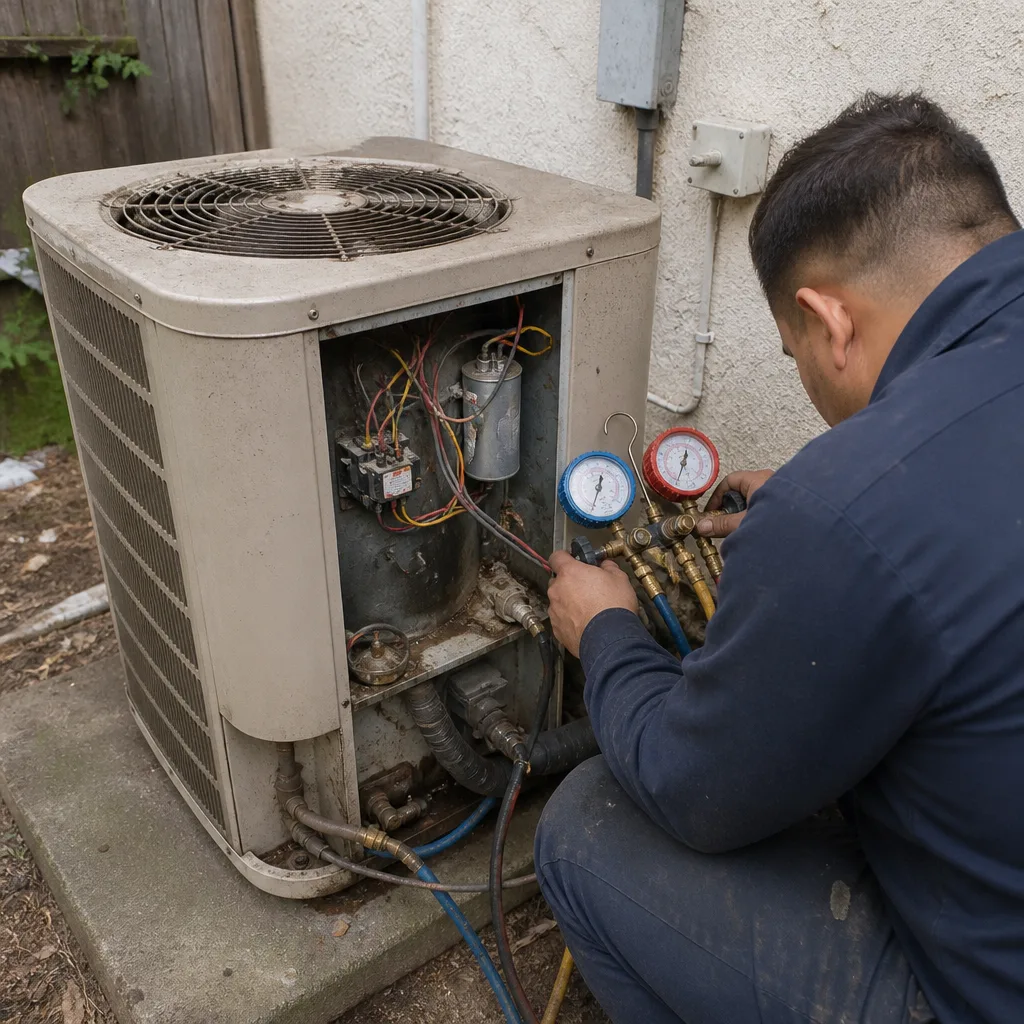 Before
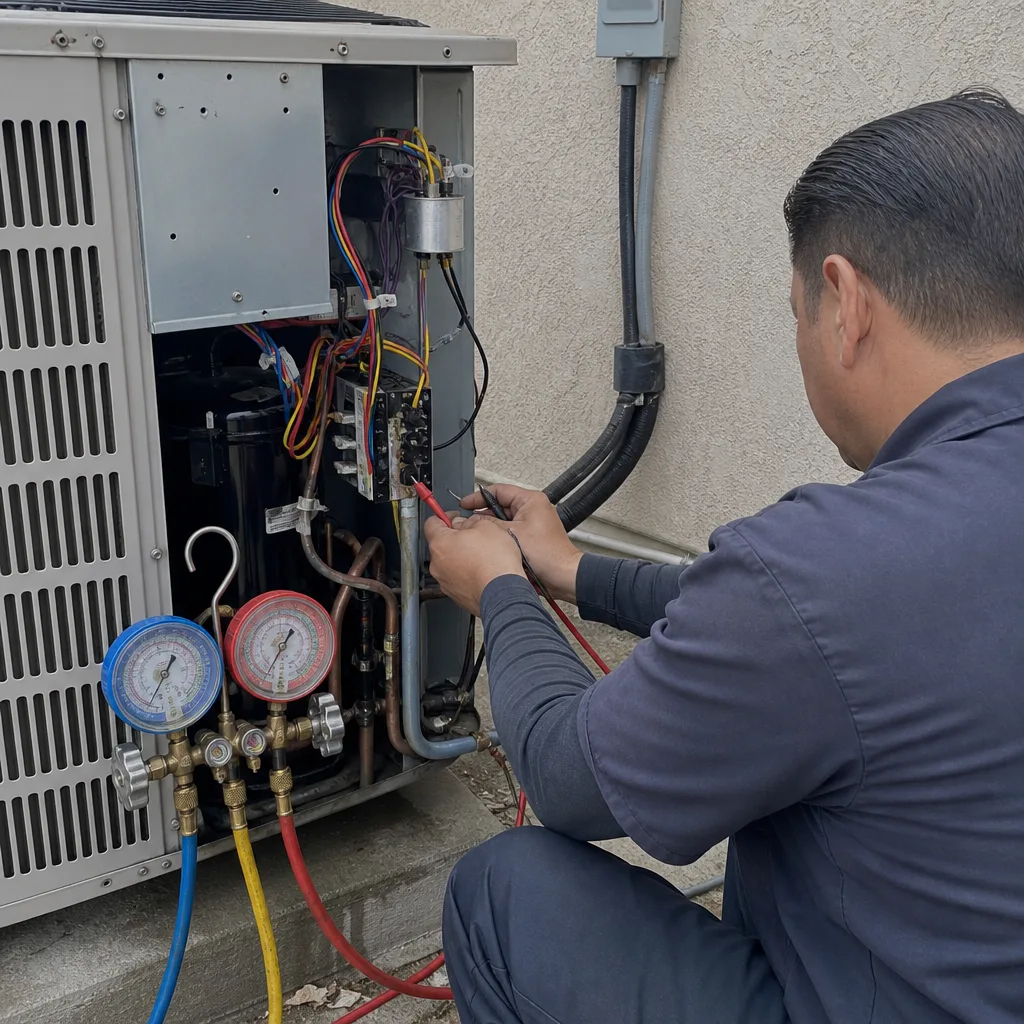 After
After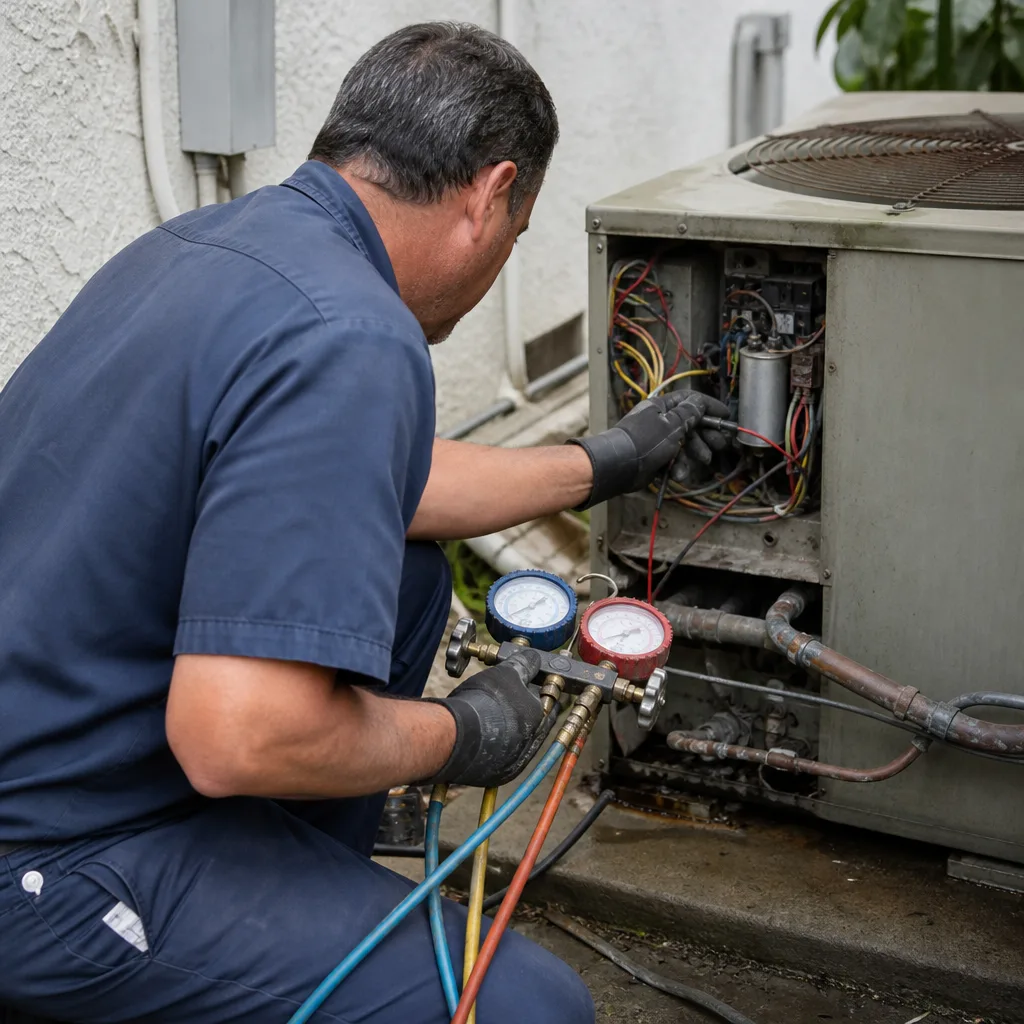 Before
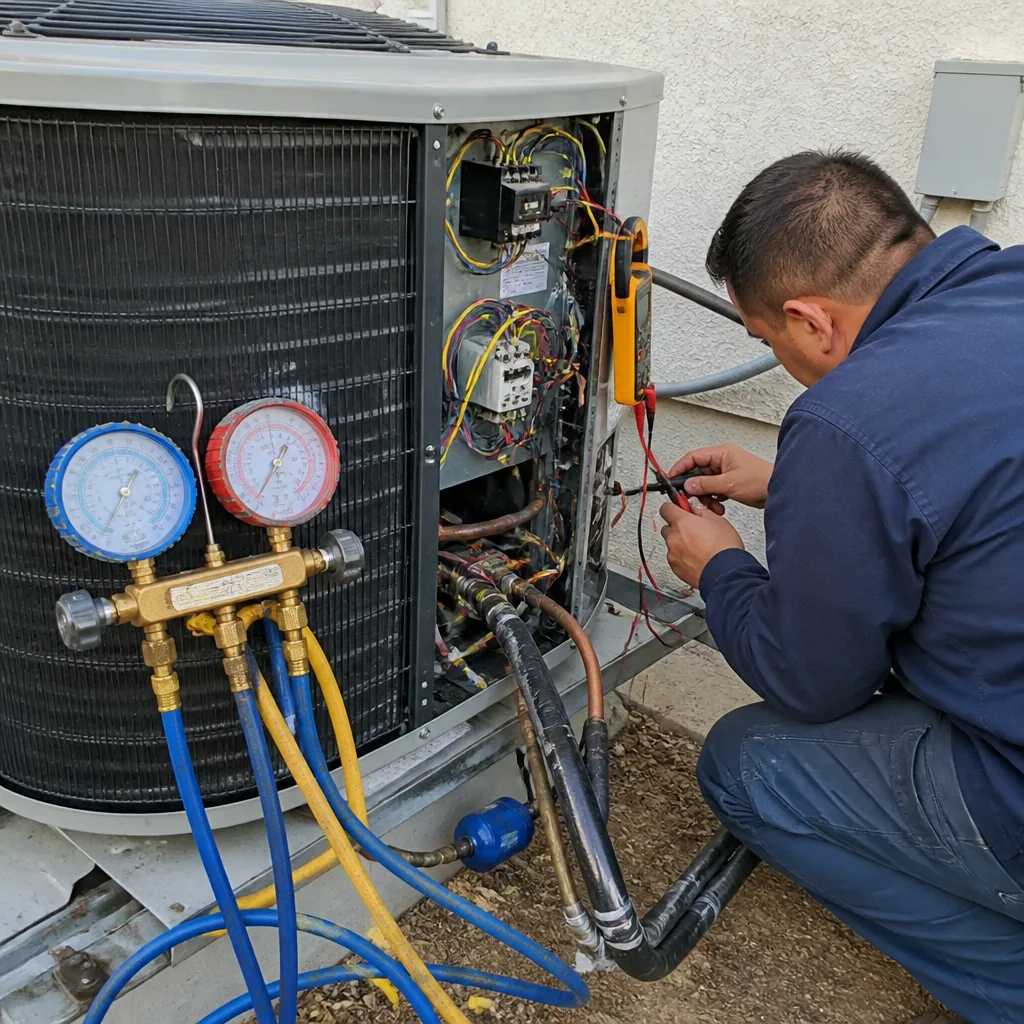 After
After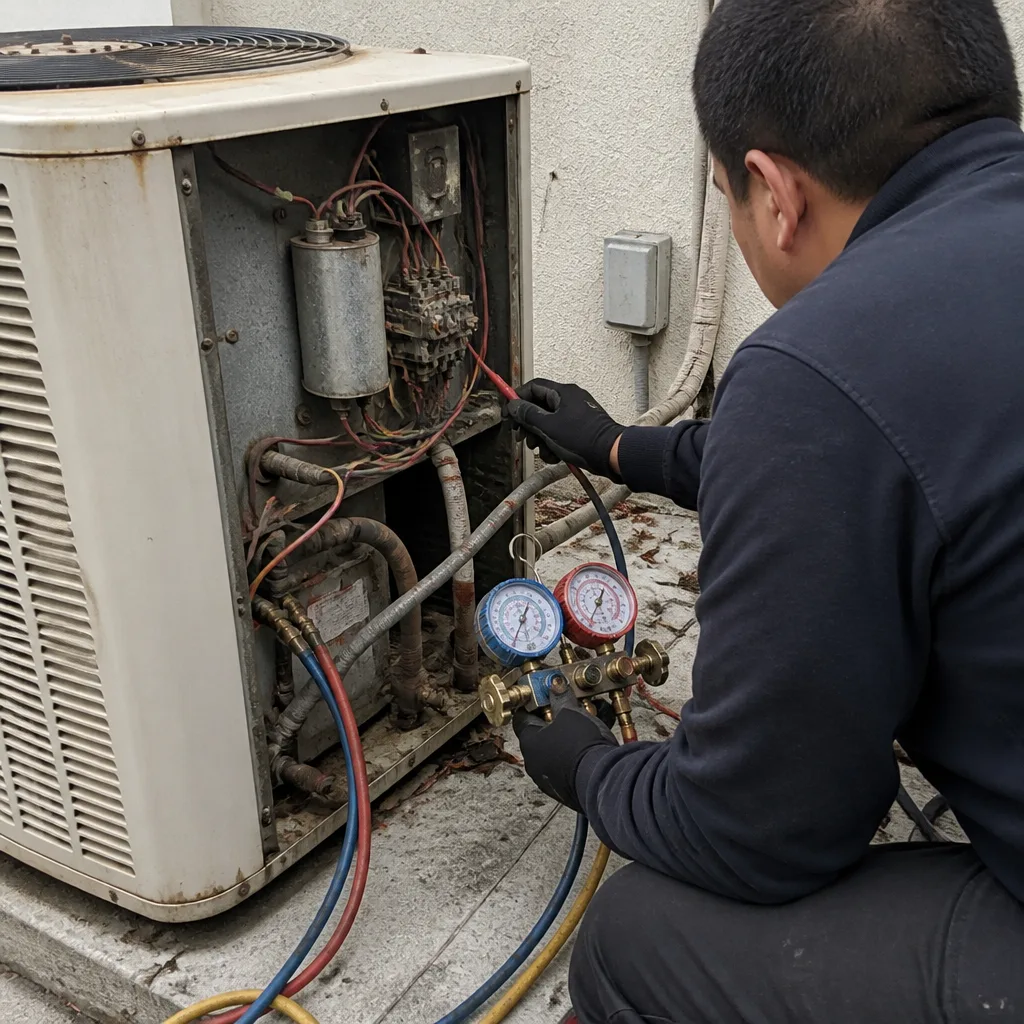 Before
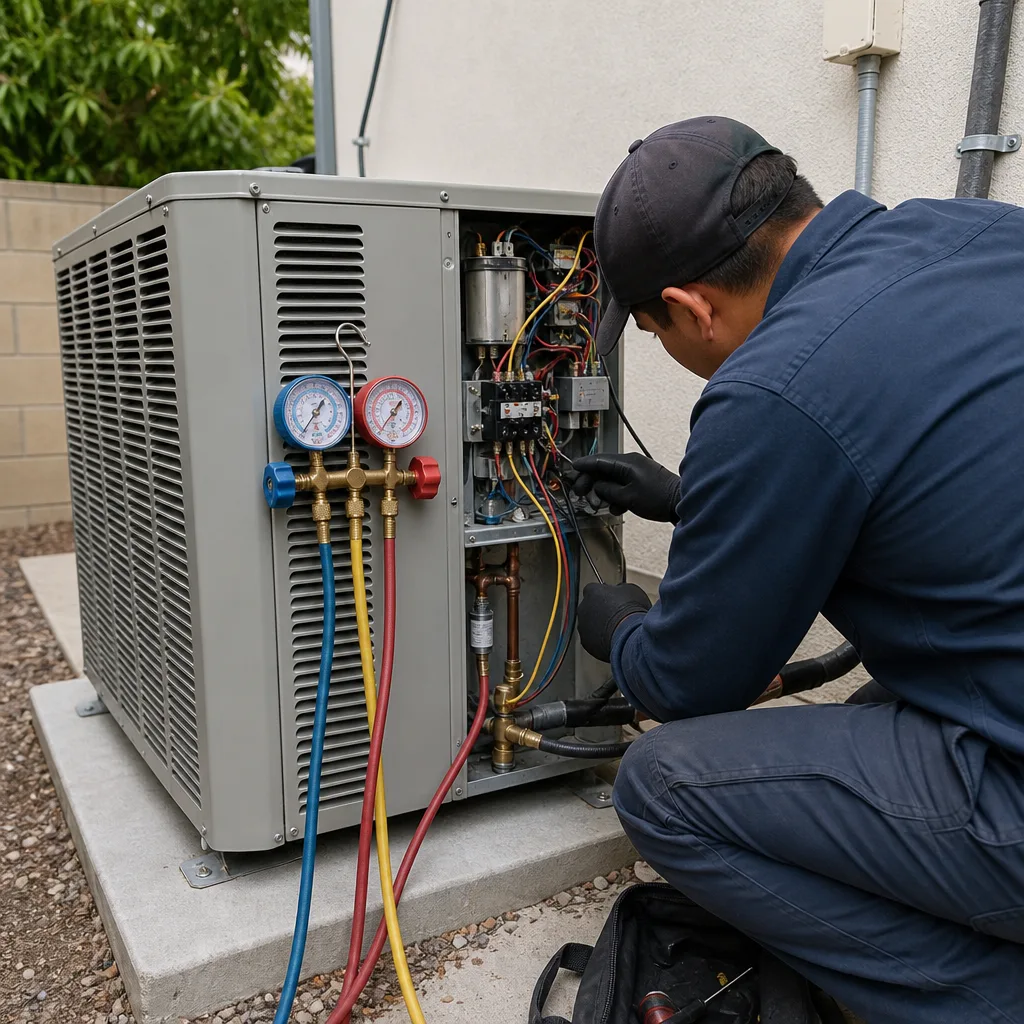 After
After