
 Furnace & heating
 AC repair
 Heat pumps
 Ductless mini splits
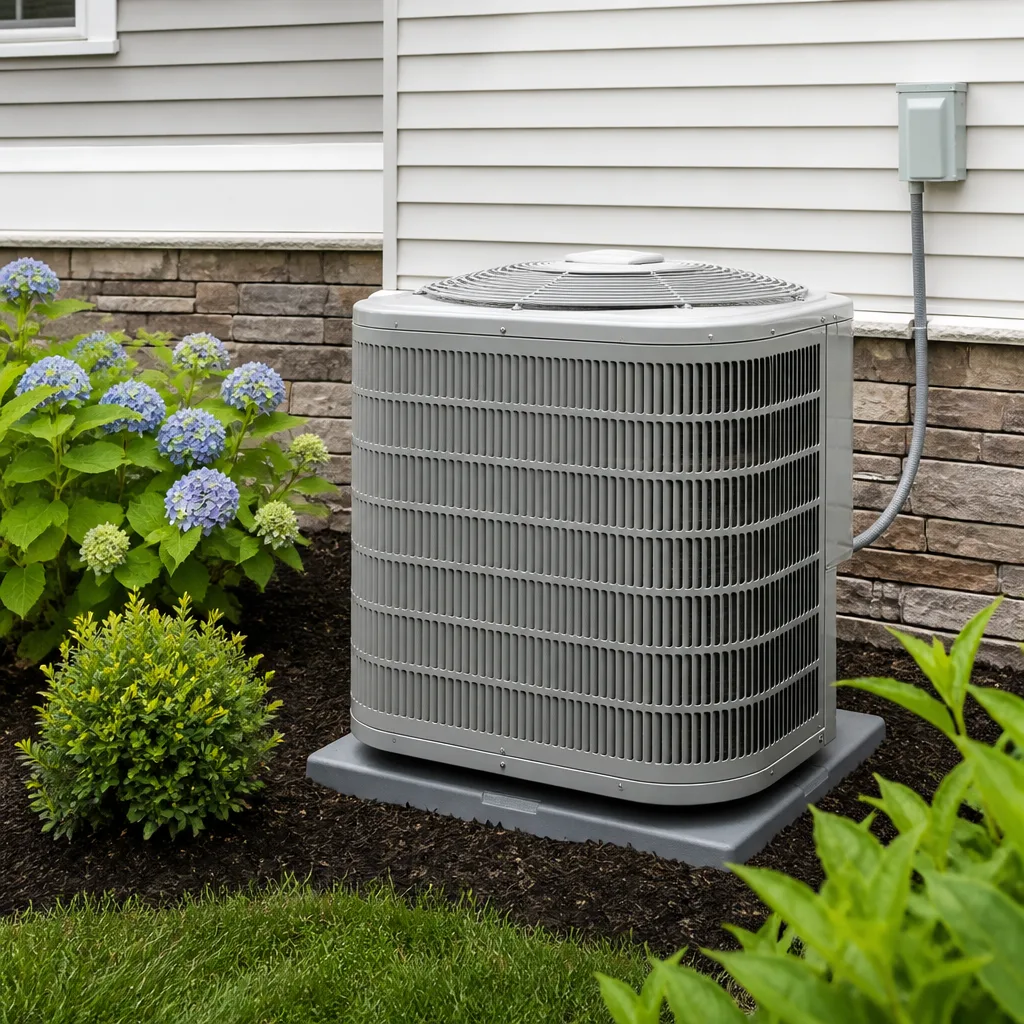 Carrier
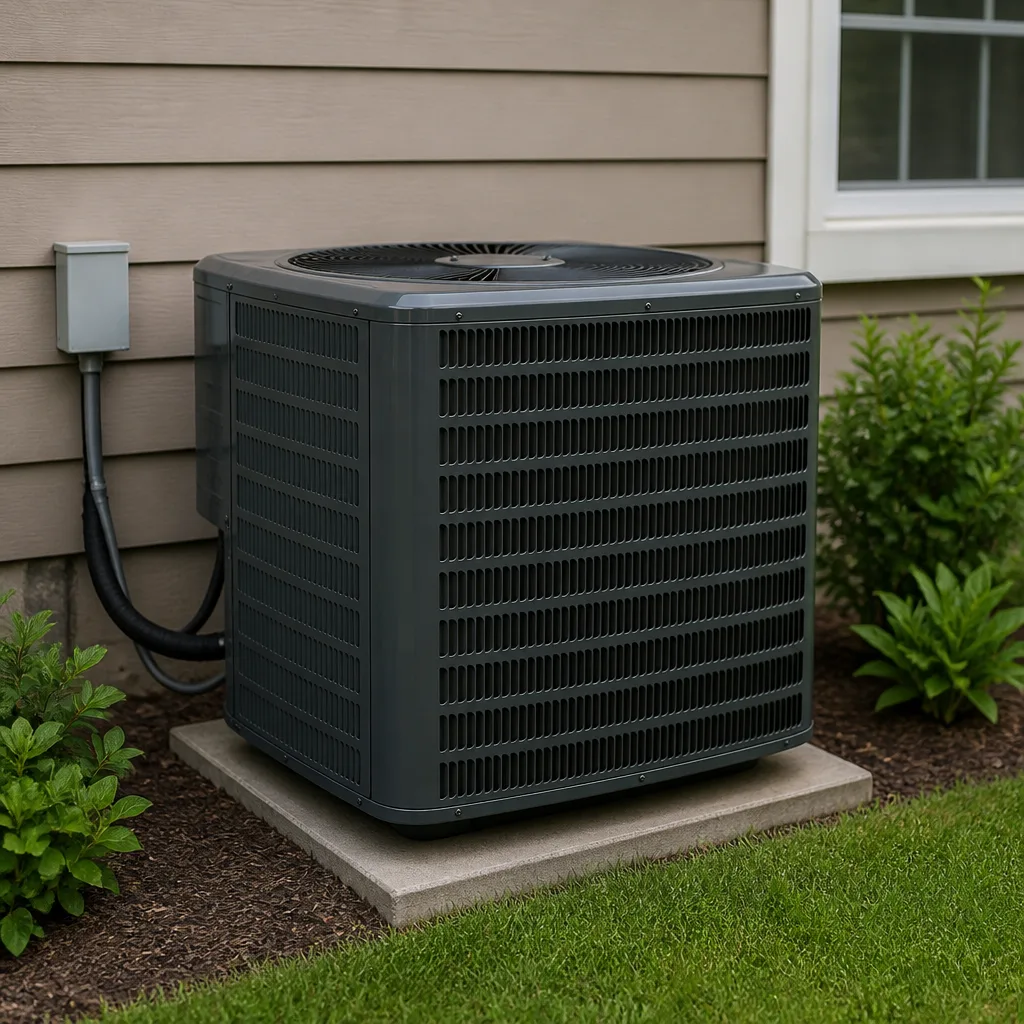 Goodman
Seasonal tune-up and full diagnostic on your Carrier, Trane, or Goodman system - readings shown to you before any repair is proposed
Diagnosis first, numbers second - you approve the repair price before a single part goes in.
Get your free estimateCarrier Capacitor Replacement: The Torrance Owner’s Guide
Most Carrier capacitor replacements in Torrance run between $180 and $340 installed, and our trucks carry the common Carrier-compatible ratings so we can usually complete the swap same-day. A capacitor is the small cylinder inside your condenser or air handler that stores and releases the electrical burst needed to start the compressor and fan motors. When it fails, the most common discovery goes like this: the outdoor unit hums but won’t kick on, the fan spins slowly or not at all, or the system starts sometimes and dead-stalls other times.
We’re an independent service provider, not affiliated with Carrier, but we work on Carrier equipment daily across Torrance, from the condo clusters off Crenshaw to the ranch-style houses near Wilson Park. Andre Fuller has been diagnosing failed capacitors long enough to know one thing: most homeowners don’t call about a capacitor. They call about an AC that “makes a weird noise” or “won’t turn on when it’s hot.” The capacitor is what we find when we open the panel. Here’s what you need to know before you call.
Which Carrier Models This Applies To
Carrier uses capacitors across virtually every residential condensing unit and air handler sold in the last 30 years, including the Comfort, Performance, and Infinity series. The part itself is universal by electrical rating, not by Carrier model number. What matters is the microfarad (µF) rating printed on the side of your old capacitor, the voltage, and whether it’s a dual-run (one can serving both compressor and fan) or a single-run. Dual-run capacitors are standard on most Carrier split systems. You’ll typically see ratings like 35/5 µF, 40/5 µF, or 45/5 µF at 370 or 440 volts on Torrance homes.
Here’s the compatibility gotcha we see often: swapping in a capacitor with the right microfarads but the wrong voltage rating is a common DIY mistake, and it shortens the part’s life dramatically. A 440-volt capacitor can replace a 370-volt one safely, but the reverse is not true. We also recommend OEM Carrier capacitors when the budget allows; they hold tight tolerances for longer in coastal heat. Quality aftermarket equivalents from brands like Titan and AmRad are a solid value, and we stock both. Trane and Lennox systems use the same capacitor technology, so if you have a second system from another brand, the same diagnosis applies.
Styles & brands we work with
Signs Your Carrier Capacitor Replacement Is Failing
- The outdoor unit hums but the fan won’t spin. This is the classic dead capacitor. The compressor is getting a start signal, but there’s not enough stored energy to actually turn the motor over. The hum is the motor trying and failing.
- The fan spins slowly or only after you give it a push with a stick. That’s a weak capacitor losing its ability to hold a charge. The motor is underpowered, running hot, and working harder than it should, which shortens its life.
- The AC short-cycles on the hottest Torrance afternoons. When the capacitor is marginal, the compressor starts fine in the morning but struggles once the condenser is heat-soaked at 3 p.m. The system kicks on, runs a few minutes, and cuts out.
- The top of the capacitor looks swollen or the sides bulge. Inside that metal cylinder, the dielectric fluid breaks down over years of heat. When it fails, pressure builds and the casing visibly deforms. A bulging capacitor is a failed capacitor.
- Your energy bill climbs without a change in usage. A weak capacitor makes motors draw more current per rotation. You’re paying for electricity the system can’t efficiently convert into cooling.
Replacement Cost & What’s Included
In Torrance, expect to pay $180 to $340 for a Carrier capacitor replacement, including the part and the labor. The spread comes down to three things: whether it’s a single or dual-run capacitor (dual-run costs more because it’s two capacitors in one housing), whether you want OEM Carrier or a quality aftermarket equivalent, and how long it takes to access the panel on your specific unit. Some older Carrier condensers have the capacitor buried behind a secondary control board; newer units put it right up front.
Every one of our capacitor replacements includes a written price before we open the panel, a written guarantee on the repair, and our 365-Day Done Right Promise. If that new capacitor fails within the coverage window, we come back and replace it at no charge. No fine print, no arguing. It’s the same standard we apply to every AC repair in Torrance, whether it’s a $180 capacitor or a full compressor swap.
See the difference
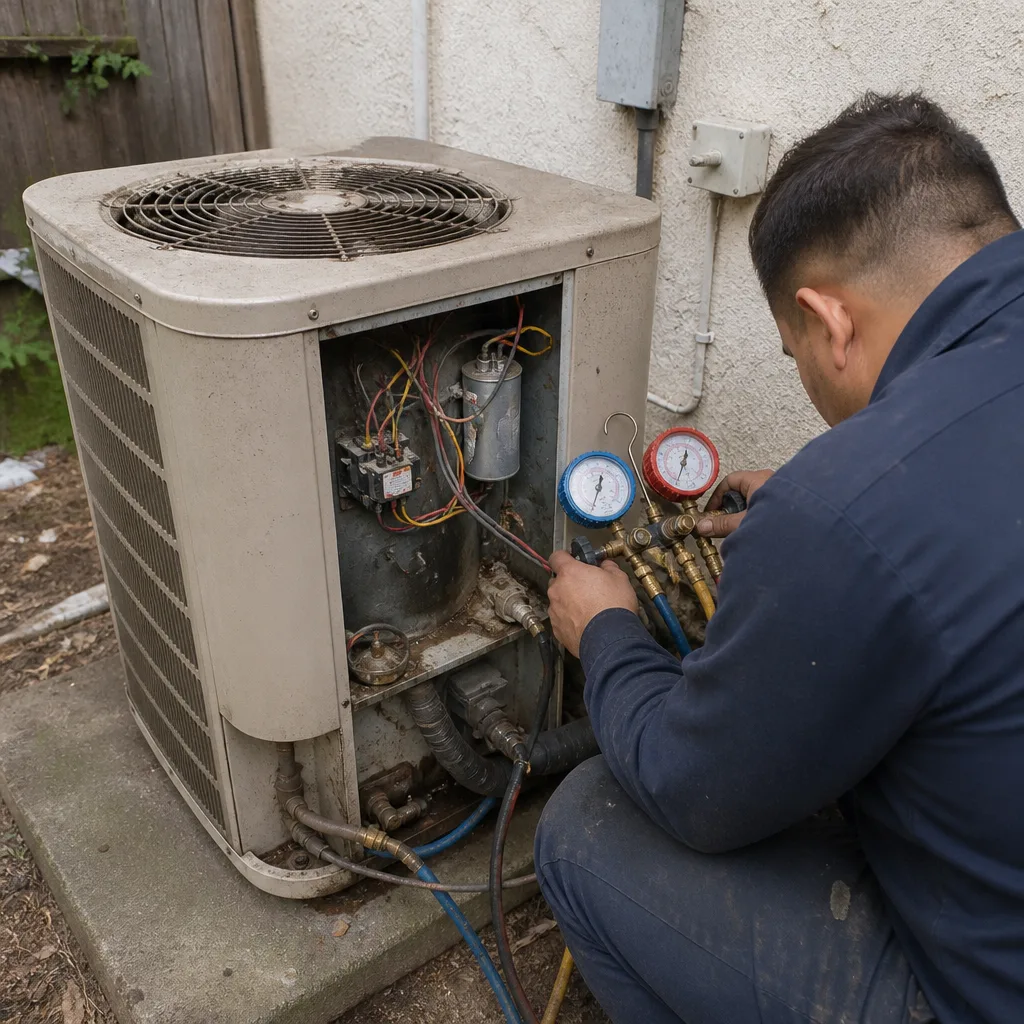 Before
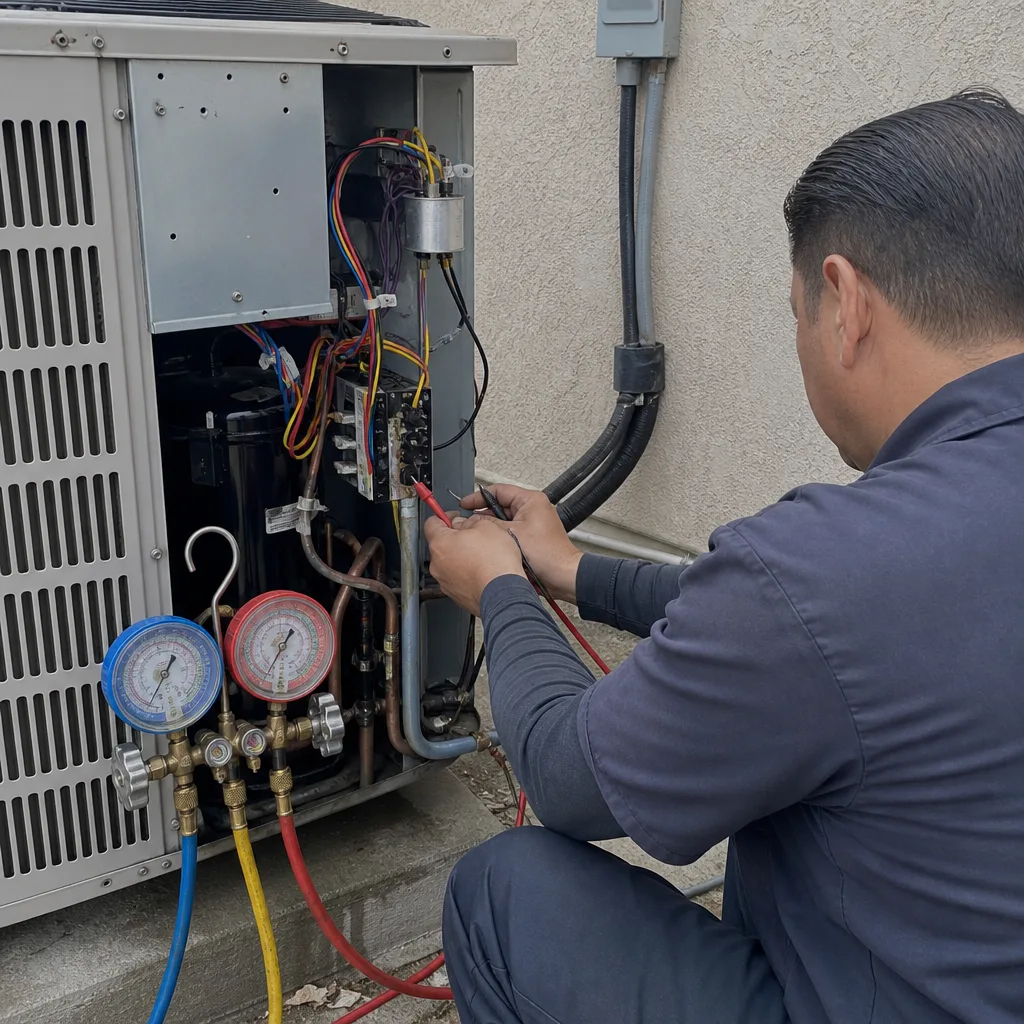 After
After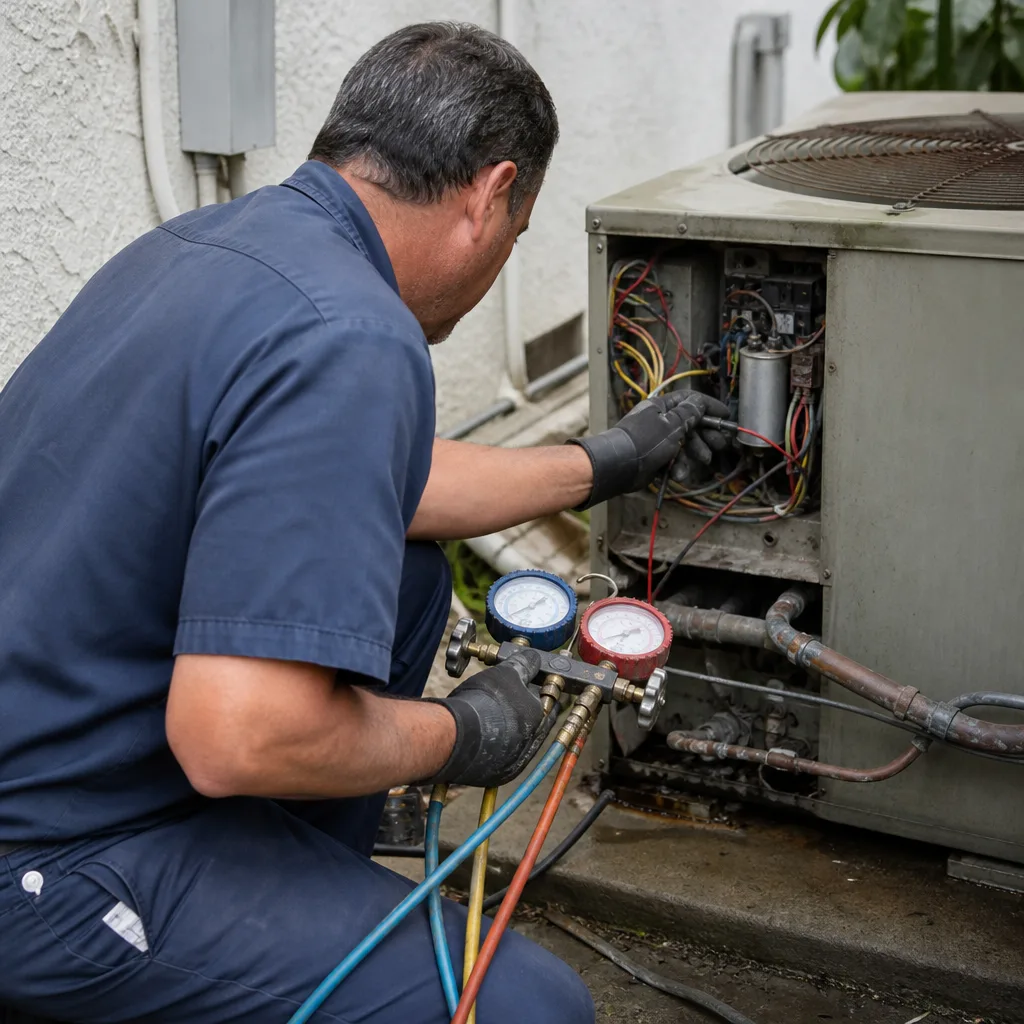 Before
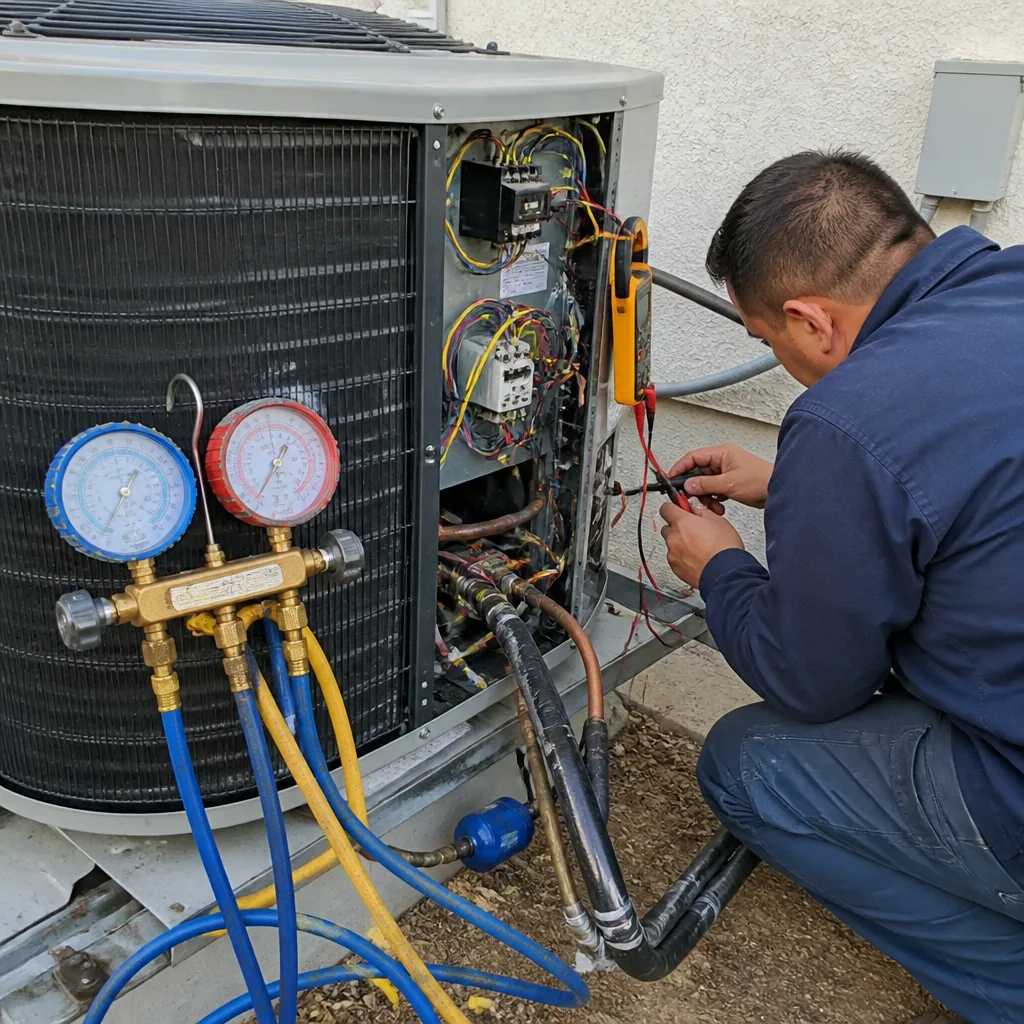 After
After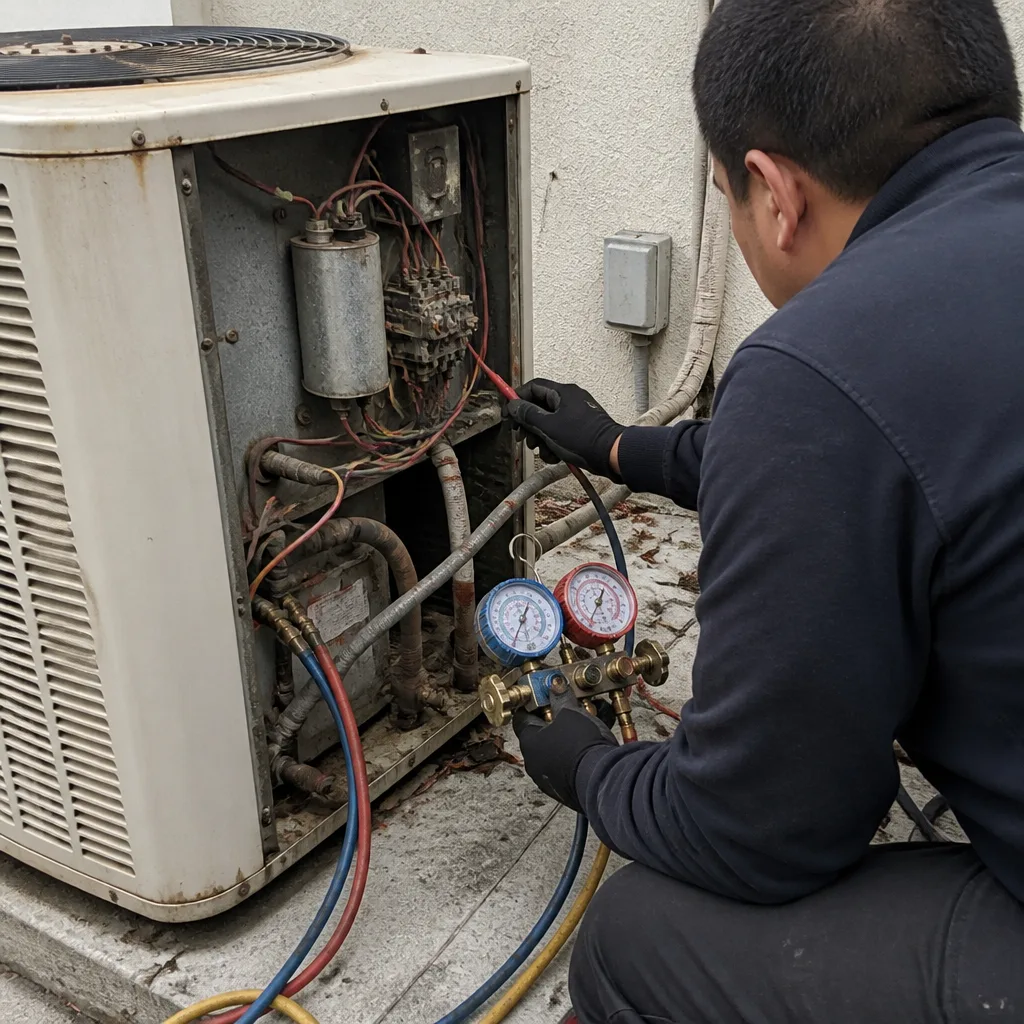 Before
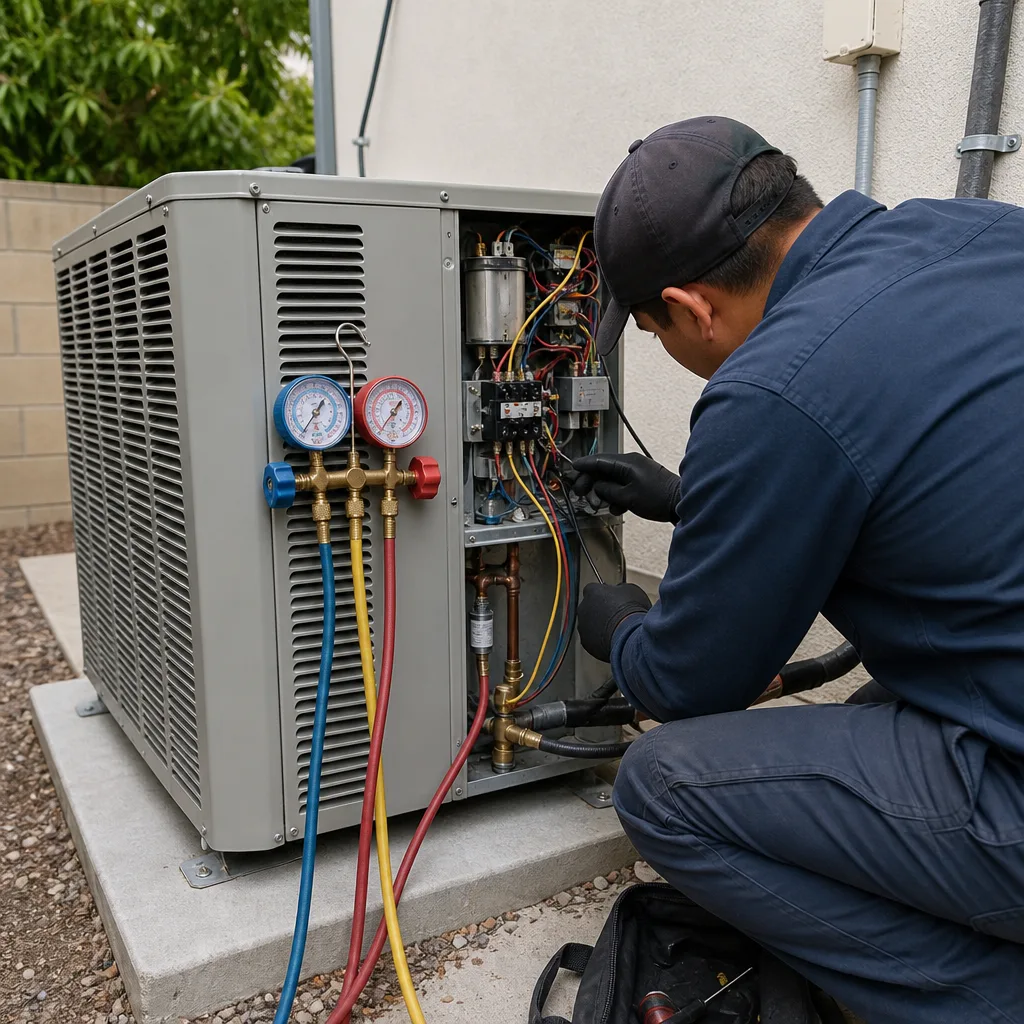 After
AfterDIY or Call Us?
Let’s be straight about this: capacitors hold a charge even after power is disconnected, and the voltage inside a charged capacitor can injure you. That’s not a scare tactic. It’s the reason the capacitor has a discharge resistor, and why we short the terminals with an insulated tool before we touch anything. If you’re not comfortable working around live electrical components, don’t open that panel.
What you can safely do is the visual check: power down the system at the breaker, remove the condenser’s access panel (usually a few screws), and look at the capacitor. If it’s swollen or leaking fluid, you’ve found the problem. Take a photo of the label, note the µF and voltage, and call us at (424) 358-3791. Tell us what you found, and we’ll tell you what the fix costs before we send a technician. If you’d rather not touch it at all, that’s exactly what we’re here for.
FAQs
Most Carrier capacitors last 5 to 10 years in Torrance’s coastal climate, though units running harder during heat waves or sitting in full sun near the 405 corridor tend to fail closer to the 5-year mark. Salt air accelerates corrosion on the terminals, so beach-adjacent homes in the Hollywood Riviera often see shorter capacitor life than inland Torrance houses.
No. A capacitor is a sealed, non-serviceable component. Once it starts to weaken or bulge, the only correct fix is replacement. There’s no rebuilding it, recharging it, or cleaning it. Call (424) 358-3791 and we’ll have a new one in your Carrier unit same-day in most cases.
A standard Carrier capacitor swap takes 45 minutes to an hour, including the time to discharge the old capacitor safely, verify the new one’s microfarad rating, and test the system’s start-up. Most of our Torrance customers are back to cold air before the technician’s truck leaves the driveway.
Yes. Our trucks carry the most common Carrier-compatible capacitor ratings for Torrance homes, including 35/5, 40/5, and 45/5 µF at 370 and 440 volts, in both OEM Carrier and AmRad aftermarket options. If we somehow don’t have your exact rating, we can almost always source it same-day from our local supply house.
Call Halden Heating and Air Torrance
If your Carrier is humming, short-cycling, or just won’t start, call us at (424) 358-3791. You’ll reach a real person, not a voicemail. We’ll book your visit online, send a background-checked technician with a live arrival time you can track, and hand you a written price before any work begins. Tell us what the system is doing, and we’ll tell you exactly what it needs, in writing, before we start.
Written by Andre Fuller, Owner & Lead HVAC Technician, Halden Heating and Air Torrance at Halden Heating and Air Torrance, serving Torrance and nearby areas.