
 Furnace & heating
 AC repair
 Heat pumps
 Ductless mini splits
 Carrier
 Goodman
Seasonal tune-up and full diagnostic on your Carrier, Trane, or Goodman system - readings shown to you before any repair is proposed
Diagnosis first, numbers second - you approve the repair price before a single part goes in.
Get your free estimateGoodman Capacitor Replacement: The Torrance Owner’s Guide
A Goodman capacitor replacement in Torrance typically runs $150 – $320 installed, depending on whether it’s a single or dual-run capacitor and which Goodman model you have. Most of the time we can complete the swap the same day, often within an hour of arriving at your door. You’ll usually discover a failed capacitor the hard way: the outside unit hums but the fan won’t spin, or the compressor tries to start and then clicks off after a few seconds. If you’ve been standing next to your condenser with a stick, gently pushing the fan blades to get them moving, that’s the classic capacitor failure signature.
Which Goodman Models This Applies To
Goodman has used capacitors across nearly every residential condensing unit and air handler they’ve built since the late 1990s, so this page applies to the vast majority of Goodman and Goodman-manufactured systems in Torrance homes. That includes the GSX, GSZ, SSX, and SSZ condenser lines, plus the Amana units Goodman builds on the same platform. You’ll find these capacitors sitting inside the electrical panel on the side of the outdoor condenser, and often a second one inside the blower compartment of the indoor air handler.
Here’s where it gets specific, and this matters more than most people realize: Goodman used different microfarad (µF) ratings depending on the compressor and fan motor pairing in each unit. A GSX14 in a 2-ton configuration needs a different capacitor than a 3.5-ton GSX16, even if both are sitting on the same street in Torrance. The rating is printed right on the side of the old capacitor: a number like 35/5 µF or 45/5 µF. That first number feeds the compressor, the second feeds the fan motor. Mismatching the rating is how we see well-meaning DIY replacements burn out a perfectly good compressor a year later.
OEM vs aftermarket: Goodman sources their capacitors largely from global manufacturers, and there are excellent aftermarket equivalents (Titan, AmRad, and Genteq make units we regularly install) that meet or exceed the original spec. We stock both OEM-matching and proven aftermarket options on our trucks. The honest trade-off: OEM costs a bit more and carries the Goodman badge; quality aftermarket brands typically carry a longer warranty and better heat-handling in the South Bay’s summer temps. I’ll give you the straight comparison, including price, in writing before any work begins.
Styles & brands we work with
Signs Your Goodman Capacitor Replacement Is Failing
- Unit hums but the fan doesn’t turn. The capacitor’s job is to give the fan motor a starting jolt. When it’s dead, the motor just sits there and hums, pulling power but producing nothing but heat. This is the number one symptom we see in Torrance, especially during the first heat wave of the year.
- Fan spins if you nudge it with a stick. That “push start” trick works because the capacitor’s start function has failed but the motor itself is fine. It’s a temporary workaround, not a fix, and it tells you exactly which part died.
- AC runs for a few seconds, then shuts off. The compressor tries to draw starting current, can’t get it from the failing capacitor, and trips the thermal overload. You’ll hear it attempt to start, then hear a click as it gives up.
- The top of the capacitor looks swollen or leaks oil. A healthy run capacitor is flat on top. When the internal dielectric degrades from heat stress, it swells like a soda can left in a hot car, and you’ll sometimes see a small oil stain on the electrical panel floor.
- The unit sounds different than it used to. A weak capacitor delivers low starting torque, so the compressor runs harder and louder. If your Goodman sounds like it’s laboring through every cycle, the capacitor is one of the first things we test with a multimeter.
See the difference
 Before
 After
After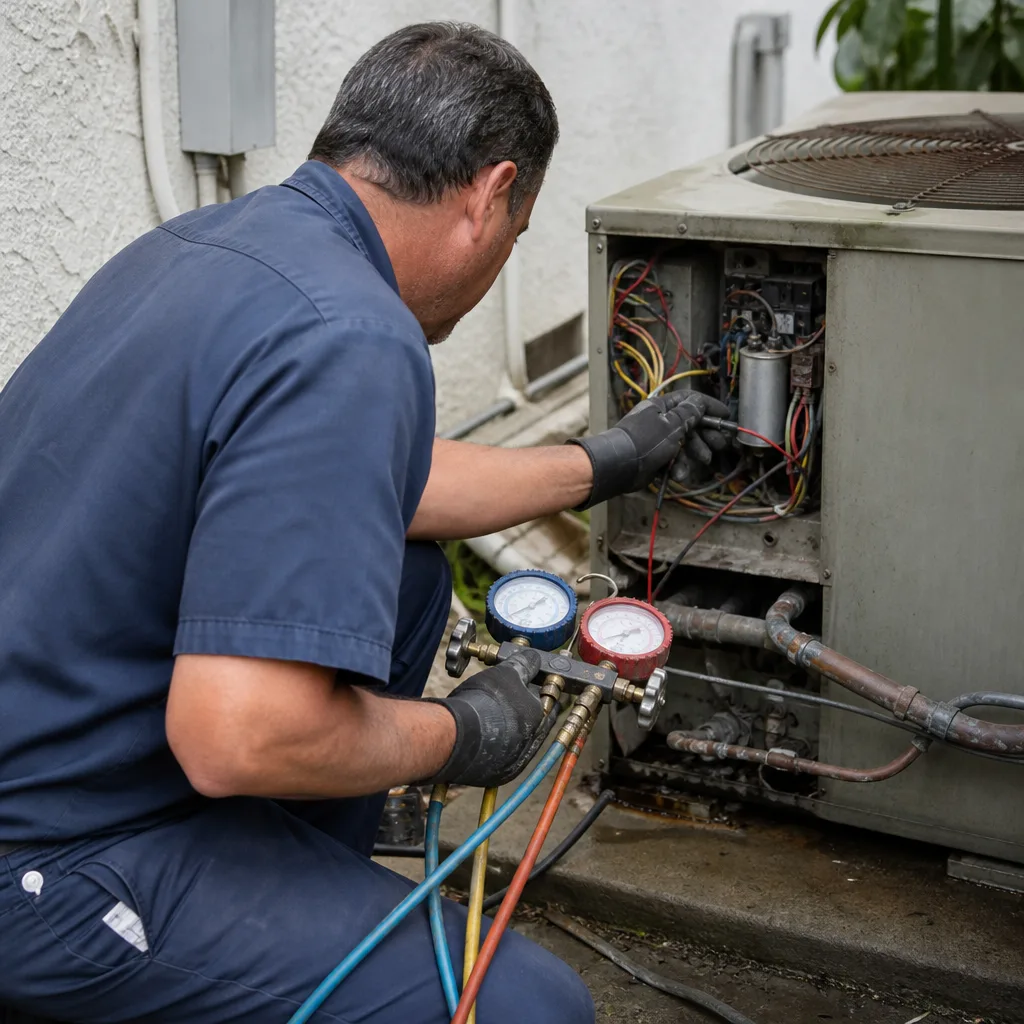 Before
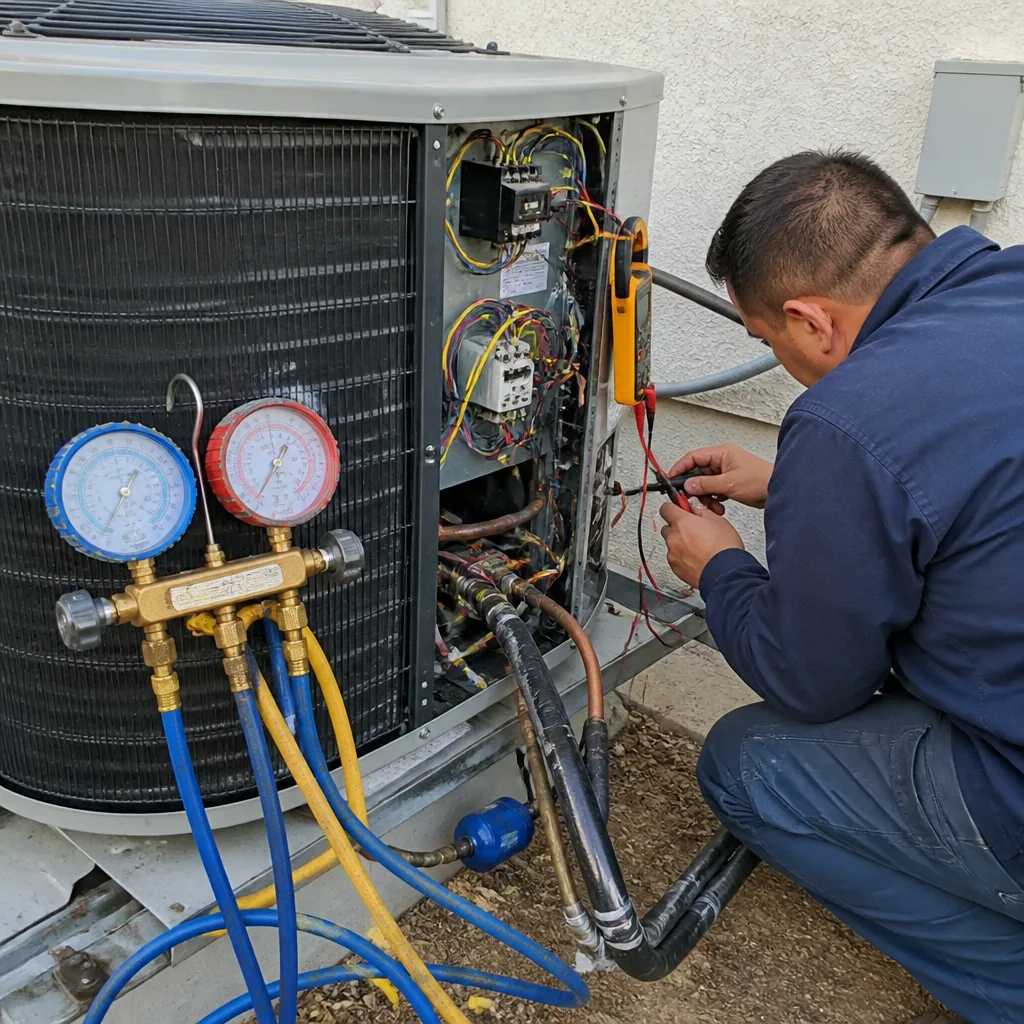 After
After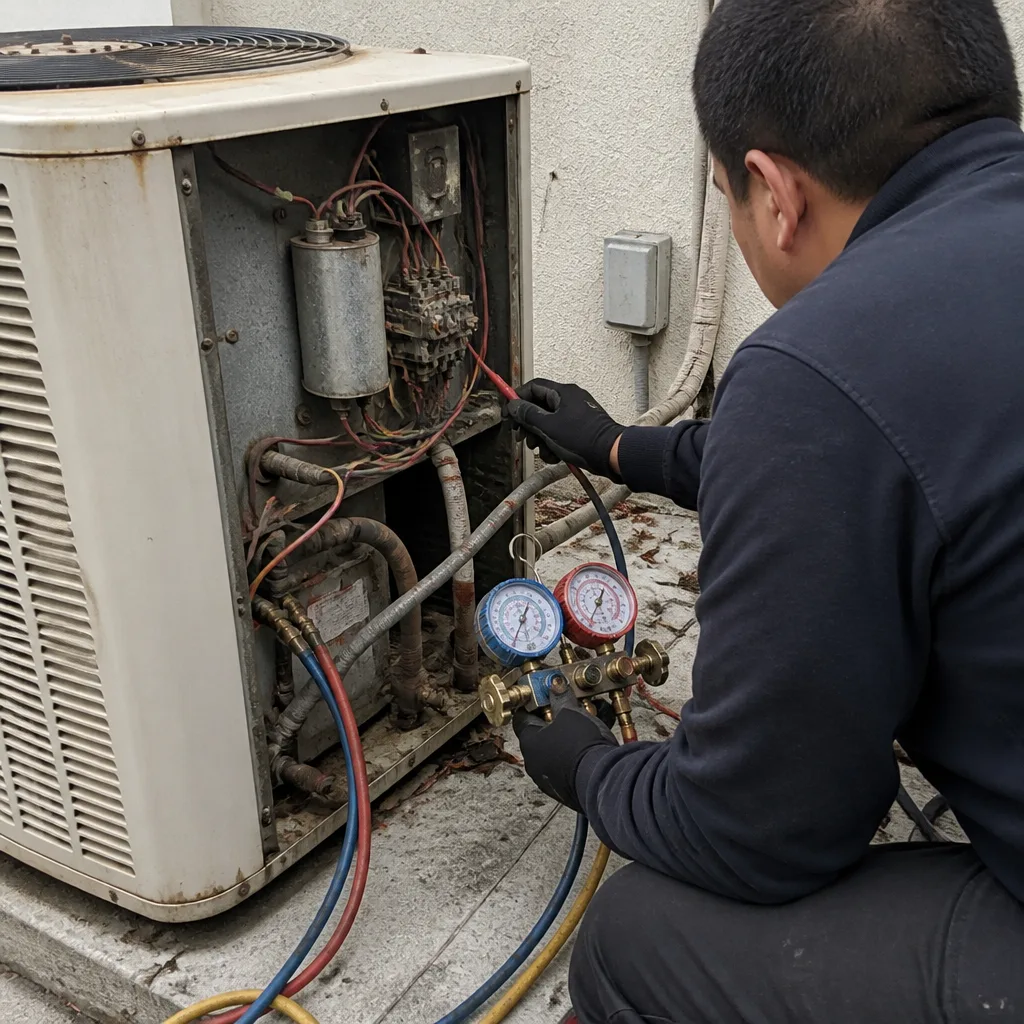 Before
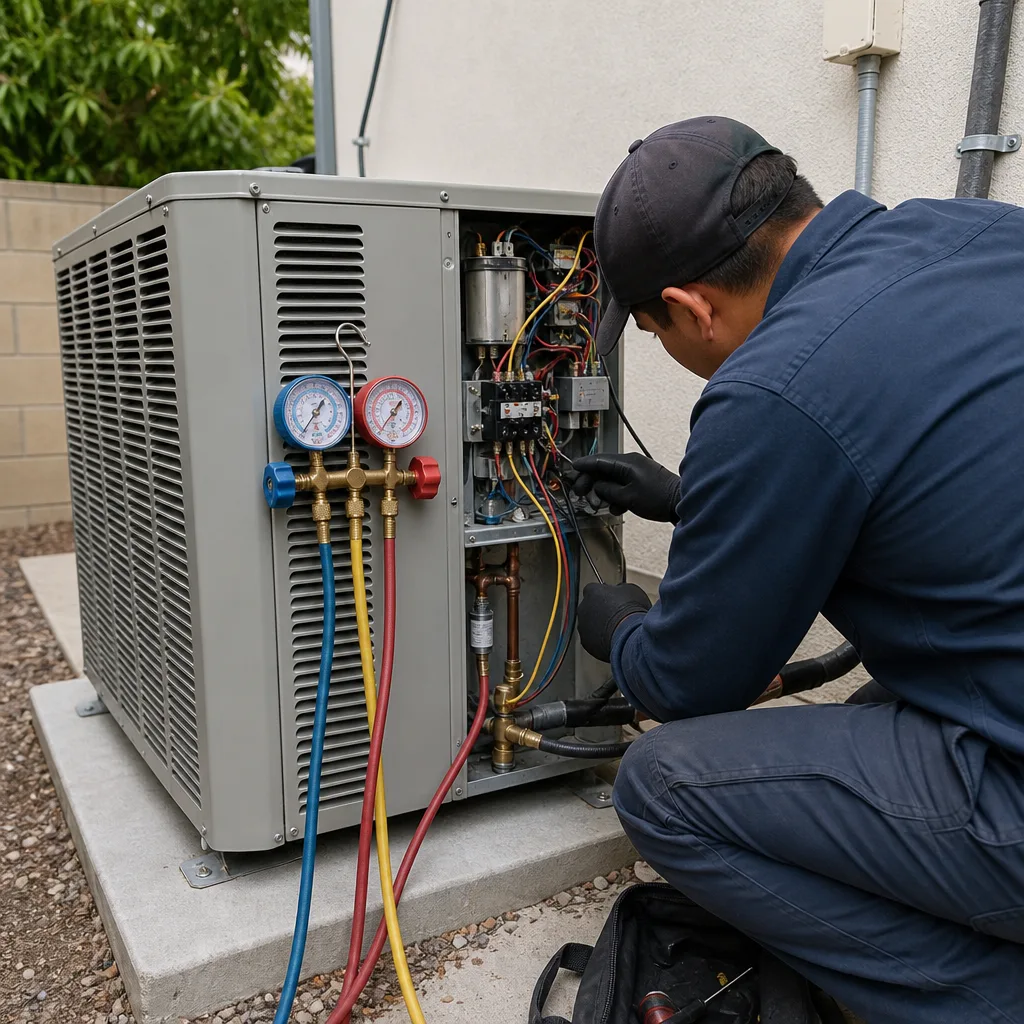 After
AfterReplacement Cost & What’s Included
For Goodman systems in Torrance, expect to pay $150 – $320 installed for a capacitor replacement. A basic single-run capacitor for a fan motor sits closer to the bottom of that range. A dual-run capacitor (which serves both the compressor and fan, and is the more common configuration in Goodman condensers) lands in the $180 – $280 range depending on its rating and whether we’re installing OEM or a premium aftermarket equivalent.
That price is the full installed price, not the part price. It includes the capacitor itself, the service call to your home, testing the old part under load to confirm the diagnosis, installing and testing the new part, and checking the contactor and wiring while we’re in the panel. Because we’d rather catch a failing contactor next to a bad capacitor than come back in August.
Every capacitor replacement carries our 365-Day Done Right Promise. If the part fails within a year, we replace it at no charge. No pro-rating, no service-call fee, no fine print. That’s written on your invoice, not something we mention in passing.
DIY or Call Us?
Let’s be direct about this: a capacitor stores enough voltage to stop your heart. Even with the power off at the breaker, the capacitor itself can hold a charge big enough to hurt you badly. Correctly discharging one requires a resistor and proper technique. If you’re not comfortable working inside an electrical panel with a live component sitting there, this is not the part to learn on.
What you can safely do as an owner: look at the capacitor through the panel grille or with the disconnect pulled (power confirmed off at the breaker) and check if the top is swollen. Read the µF rating printed on the side so you can tell us what you’re looking at. That’s genuinely useful, and it helps us bring the right replacement the first time. But for the actual swap, call us. A DIY mistake here can damage your compressor, and that is a $2,000 – $3,500 problem, not a $200 one. Call (424) 358-3791 and we’ll have a tech headed your way with the right part and a written price before anything gets touched.
FAQs
Most Goodman capacitors last 5 to 10 years, but in Torrance’s summer heat, where attic temps climb and condensers run for months at a stretch, we regularly replace them at the 5 – 7 year mark. Heat is the main killer: every degree above 130°F on the capacitor’s internal temperature shortens its life, and a South Bay condenser in direct sun on an August afternoon gets hotter than that.
No. Capacitors are sealed, non-serviceable components. Once the internal dielectric breaks down or the can swells, it’s done. The repair is the replacement, which is why we keep the most common Goodman-rated capacitors stocked on our trucks and can typically complete the job in under an hour on-site.
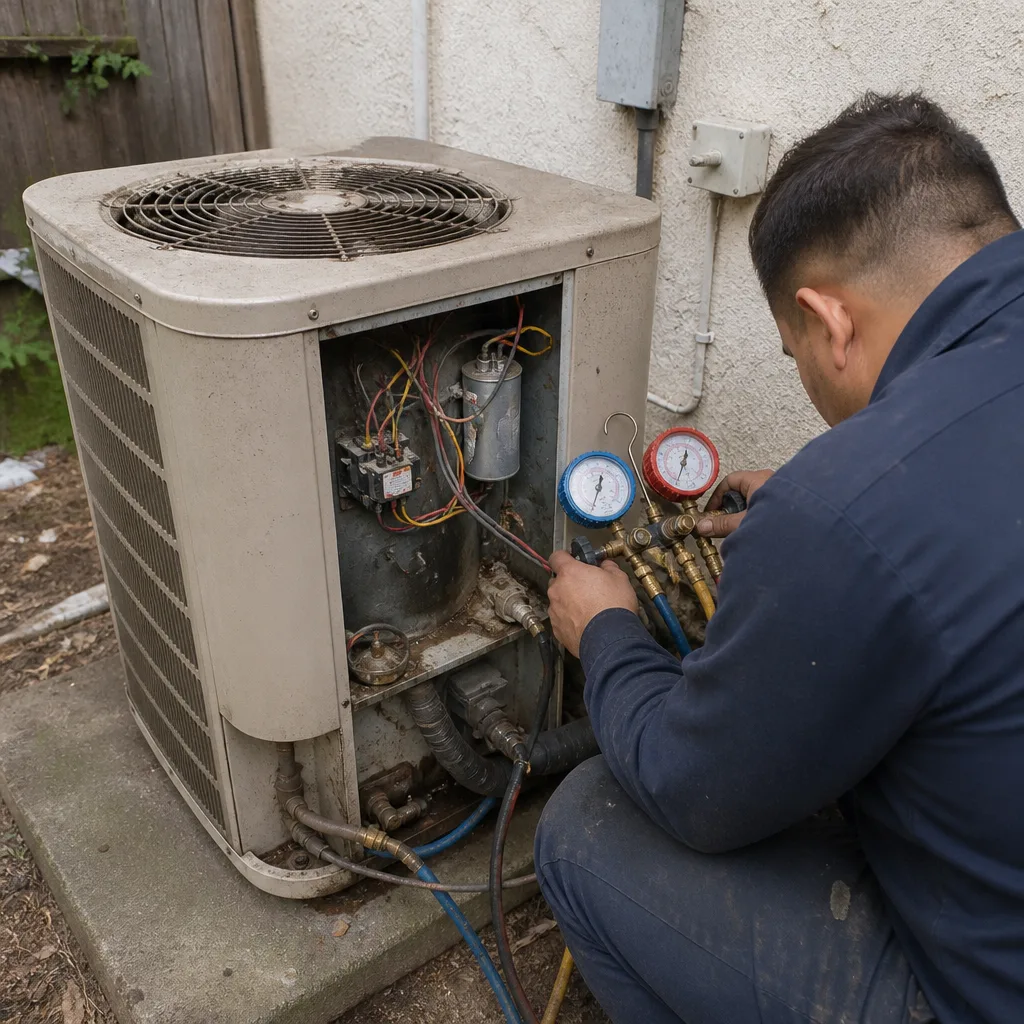
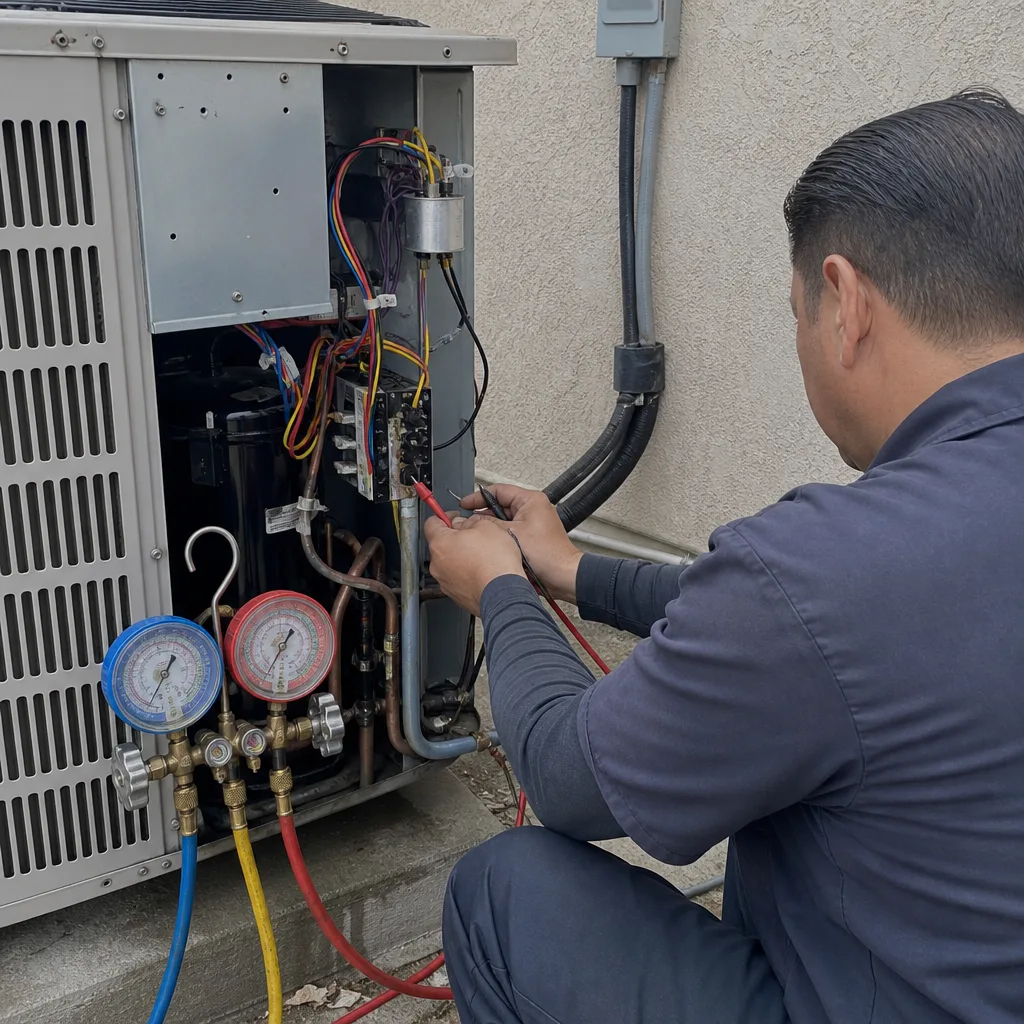
Plan on 30 – 60 minutes from arrival to done. That includes confirming the diagnosis with a multimeter, discharging the old capacitor safely, installing the new one, testing the start-up under load, and checking the surrounding wiring and contactor. We’ll send you before-and-after photos so you can see exactly what was replaced.
Yes. Our trucks carry the most common dual-run capacitor ratings for Goodman condensers (35/5, 40/5, 45/5, 50/5 µF) plus single-run capacitors for blower motors. If your unit needs a less common rating, we can typically source it from our local Torrance supply house the same day. Call (424) 358-3791 and tell us the rating printed on the side of the old part; we’ll confirm it’s on the truck before our tech heads your way.
Written by Andre Fuller, Owner & Lead HVAC Technician, Halden Heating and Air Torrance at Halden Heating and Air Torrance, serving Torrance and nearby areas.